
In India, the prices of gold and silver were influenced positively on April 11 after recovering some of the losses sustained earlier in the week as the international markets stabilised due to steep fluctuations, associated with geopolitical events. The recovery follows a turbulent period brought about by the US-Iran ceasefire, currency oscillations, and the changing expectations on global interest rates.
Domestic markets were also characterized by a gradual recovery and both metals were strengthening in key cities. The surge was not as steep as the previous spikes, but was an indication of a resurgence of buying interest following the recent confusion.
Gold rebounds as world signals are bothersome
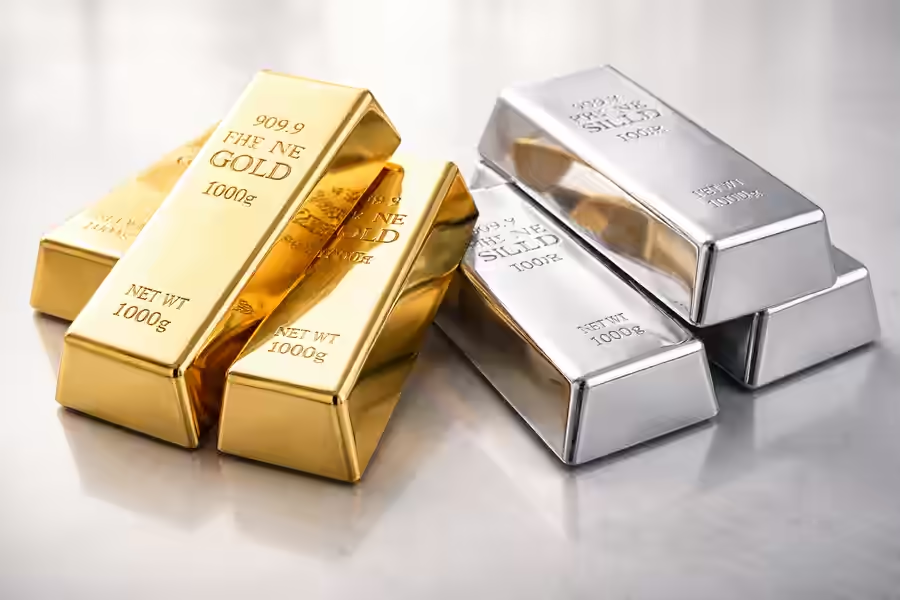
In India, gold increased by approximately ₹870 per 10 grams which narrows down the loss registered in the past sections. The price of 24-carat gold stood near ₹1,52,350 per 10 grams, while 22-carat gold was around ₹1,39,650. There was also an proportional increase in lower purity gold which is also reflective of the larger trend of increasing upwards.
The domestic gold prices recovery is in spite of the fact that international markets slightly cooled down at the end of the week with prices high, though indicating consolidation. Gold has remained stable with consistent weekly gains, which have been aided by the safe-haven demand and the anticipation of relaxed monetary policies across the world.
| Date | 24K Gold (per gram) | 22K Gold (per gram) |
|---|---|---|
| 11 Apr 2026 | ₹15,235 | ₹13,965 |
| 10 Apr 2026 | ₹15,148 | ₹13,885 |
| 09 Apr 2026 | ₹15,382 | ₹14,100 |
| 08 Apr 2026 | ₹14,984 | ₹13,735 |
| 07 Apr 2026 | ₹15,066 | ₹13,810 |
The movement of prices was more or less consistent across cities. In Delhi, Jaipur, and Lucknow, the gold trading was near ₹1,52,500 per 10 grams and in cities such as Mumbai, Pune, and Kolkata the gold trading was at slightly lower levels. Chennai was still priced higher and indicated regional pricing disparities and local demand environment.
The recent development emphasizes the strong dependence between domestic prices and global indicators such as currency and investor mood. Even minimal changes in the global prices or exchange rates are likely to affect retail gold rates in India.
Silver surges up, retains above key levels
The prices of silver also improved in the local market, with the rates reaching over 2.60 lakh/kg in most of the major cities. In recent sessions, the metal has displayed sharper movements relative to gold, as a symbol of its dual nature as a precious and an industrial commodity.
| City | 10 Gram | 100 Gram | 1 Kg |
|---|---|---|---|
| Chennai | ₹2,651 | ₹26,510 | ₹2,65,100 |
| Mumbai | ₹2,601 | ₹26,010 | ₹2,60,100 |
| Delhi | ₹2,601 | ₹26,010 | ₹2,60,100 |
| Kolkata | ₹2,601 | ₹26,010 | ₹2,60,100 |
The silver prices in India increased following a turbulent year in which there were huge fluctuations within a period of time. The recent rise signifies a stabilisation period, with purchasers coming back when prices hit a bottom.
Companies City-wise, most markets including Delhi, Mumbai, Kolkata, and Ahmedabad were trading at similar prices with the southern markets such as Chennai and Hyderabads still trading at a premium. These regional variations are affected by logistics, demand trends, and local market dynamics.
Silver has been trading globally in a fairly stable range following previous volatility. The prices are supported by strong industrial demand, especially within such industries like electronics and renewable energy, despite short-term volatility caused by factors in the financial markets.
What is the motivation behind the recent price trend?
A mixture of both geopolitical and economic factors is influencing the recent trends in the gold and silver prices. The short-term truce between the US and Iran lowered short term uncertainty and a certain degree of profit-taking was witnessed in the international markets. Nevertheless, the state of affairs is still precarious and the demand of safe-havens is not eliminated.
Also Read: From cash to QR: How UPI reshaped India’s digital payments system
Meanwhile, a fall in the prices of crude oil has taken the pressure off inflation, drawing speculation that interest rates might be reduced by central banks, such as the US Federal Reserve. Typically, the precious metals are favored by low interest rates since the cost of holding non-yielding assets such as gold reduces.
Also contributory are currency movements. The US dollar has been fluctuating and this has a direct effect in global prices of bullion, translating into domestic rates in India.
The implications of this to buyers and investors
To the Indian buyer, the current stage is an indication of continued volatility and not an inclination. Prices have been swinging drastically and in short periods of time and therefore timing is a key consideration to both the investor and the jewellery purchaser.
Also Read: From critic to negotiator: JD Vance leads crucial Iran peace mission
Other expenses that are also involved in retail pricing include GST and making charges, which differ based on the product and region. Consequently, there are high chances of a gap between actual purchase costs and headline rates.
High making charges and storage issues are making investors focus on other alternatives like gold ETFs and other financial instruments as a way of evading such charges. The latter options enable the possibility of engaging in price movements without the need to work with physical assets.
There is a question of market outlook
In the future, both gold and silver would be susceptible to world events. Fresh price moves can be initiated by any change in the geopolitical tensions or central bank policy.
Also Read: Asim Munir’s uniform diplomacy: Combat gear for Iran, suit for US
Although gold has been relatively stable with slow growth, silver is probably a more volatile commodity because of its industrial need factor. Key global indicators are being monitored by the market participants to gauge the direction to take.
In the meantime, the recovery observed on April 11 indicates that the market is coming out of a turbulent period but still, uncertainty is playing an important role in determining price trends in the immediate future.