
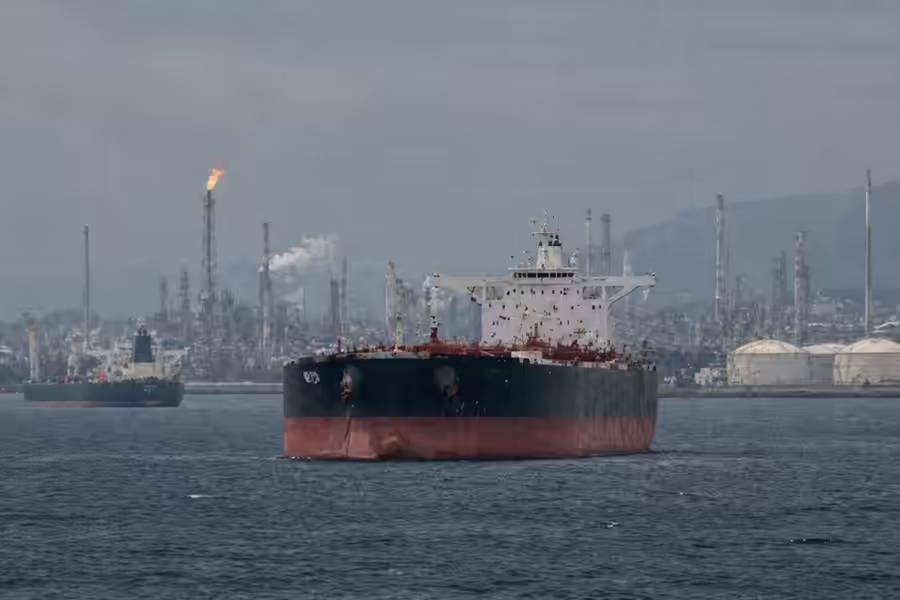
The US has escalated its economic sanctions on Iran by attacking a Chinese oil refinery and almost 40 shipping firms that transport Iranian crude. The action represents a new spiral in the quest by Washington to limit the main source of funds of Tehran as geopolitical tensions continue to spiral in West Asia.
The sanctions, announced on Friday, are part of a larger campaign to reverse an Iranian oil network that US officials claim to be a shadow network transporting Iranian oil through worldwide markets.
The Teapot Refinery Network in China Crackdown
The US Treasury claims that the move is particularly against an independent Chinese refinery, often called a teapot refinery. These smaller refineries tend to be independent of large state-owned systems and are reputed to acquire discounted crude oil even Iranian supplies.
The sanctions have been further imposed on dozens of vessels and shipping operators that are alleged to have helped in transporting Iranian oil. According to the officials, these organizations are instrumental in enabling Iran to circumvent the previous limitations and sustain its exports.
US Treasury Secretary Scott Bessent has said that Washington still has more to tighten its grip on networks that facilitate the oil trade of Iran, which is an indication that there may be more to come.
An Element of the Strategy of Maximum Pressure
The new actions are within the US administration’s current policy of maximum pressure against Iran. The plan is geared towards reducing sources of money that, as Washington puts it, finance regional wars and destabilising efforts.
Also Read: Raghav Chadha Resigns from AAP, Joins BJP with Six Other MPs
Authorities said that the sanctions were a bold measure to impose what they said was a financial stranglehold on Iranian energy exports. The relocation is a delicate one, as the situation in the Strait of Hormuz remains tense, and delicate diplomatic work is going on.
China Strikes Back in Sanctions
The Chinese reaction was fast. The move by Beijing was condemned by the US government as Washington was accused of politicising world trade, and abusing unilateral sanctions.
Chinese officials said that they should not disrupt normal commercial activities and threatened that such action would destabilize global energy markets. The creation poses the risk of creating another point of friction between the already tense US-China relations.
Effects on World Oil Trade
China is still the biggest purchaser of Iranian oil with an estimated 80 percent of the exports to Tehran. The past sanctions have already compelled traders to use complicated routes and transactions that are not transparent in order to keep doing business.
As the most recent restrictions, the shipping networks and middlemen are subjected to more scrutiny, potentially disrupting supply chains and driving up the costs of transactions. It is reported that customers have been paying a premium on Iranian crude because of increasing enforcement risks.
What This Means In the Future
These sanctions are also important in terms of timing, with the United States and Iran about to engage in another series of negotiations. The threat of maritime tensions in major oil routes such as the Strait of Hormuz has already impacted the global oil flows and any further interference may have far-reaching economic consequences.
To the world markets, the shift is an indication that geopolitics risks are still a significant factor contributing to energy prices. Although the short-term supply effect is still under evaluation, the further growth might cause the crude oil markets to become volatile.
With the situation changing, it will still be about the responsiveness of Iran, whether China changes its import policies, and how these changes will influence the next round of international negotiations.
Also Read: