
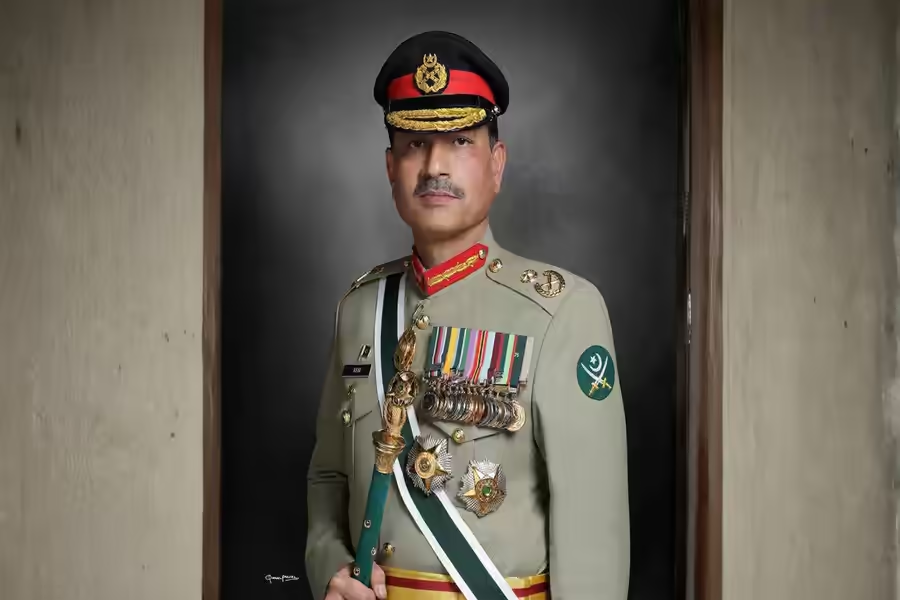
When Pakistan is making efforts to present itself as an intermediary between the United States and Iran, a recent intelligence evaluation issued by the United States has thrown the performance of its army chief, General Asim Munir, into question. Reportedly, Munir is considered a possible threat factor to the Donald Trump administration, as delicate talks continue to be held, according to intelligence circles in the US.
This is of concern despite the fact that behind-the-scenes talks are being conducted in Islamabad to alleviate tensions in West Asia. Although publicly the US leadership has credited the efforts of Pakistan, privately there is seemingly unhappiness with the influence and intentions of its military leadership.
The issue of Iran connections is a matter of strategic concern
The US intelligence agencies have reportedly placed Munir on the radar because of his alleged extensive links with the top people in the military set up in Iran. Analysts believe that these connections will make the work of Washington to be complicated particularly when Pakistan is playing the role of bridging between two foes.
According to some former Pakistani military officials, Munir had contacts with some of the major Iranian commanders in the past. To US policymakers, this two-way alignment is being perceived as a potential conflict of interest when trust and transparency are paramount in any peace process.
It is not only about personal connections, but also whether Pakistan is able to become a neutral mediator. When the army leadership is seen to be inclined towards one side, it may undermine the integrity of the entire negotiation structure.
The history of Pakistan contributes to the distrust
Washington is also cautious based on experience. The US agencies still employ Pakistan to gauge its reliability due to its involvement in Afghanistan. Critics have frequently cited examples in which Islamabad was able to have parallel relationships- collaborating with the US and at the same time supporting other regional actors.
Also Read: Akshay Kumar Reveals Hera Pheri 3 Delays: Fans Disappointed Again
This past has resulted in a wider view among parts of the US establishment that Pakistan is an untrustworthy partner. The perception seems to be reoccurring in the present scenario.
Analysts have cautioned that the fact that Munir was at the centre of both military control and coordination of the diplomatic process may give Pakistan an undue advantage in influencing the final results at the back-room level.
The power of the military and domestic politics are called into question
It is not just a matter of foreign policy that is debated. Observers also refer to the changes that have been taking place in Pakistan where the role of the military in governing this country has escalated over the past years.
Critics believe that since Munir assumed the leadership of the army in late 2022, there is a decreased political space, and pressure on the voices of opposition is amplified. This has cast doubt on the way decisions are being made in Pakistan, and whether a civilian leadership is in full control of the diplomatic affairs.
Also Read: BSB Board Results 2026: Class 10 and 12 Scorecards Now Available Online
Remarks by Munir in past open forums, especially on matters such as freedom of expression have further enhanced the idea of a more centralised and controlled system of governance.
Trump administration torn between faith and fear
The Trump administration, despite these concerns, has been involved in working with Pakistan. As a matter of fact, one of his former presidents, Donald Trump has publicly praised Munir, saying that he assisted in alleviating tensions in the India-Pakistan standoff in 2025.
Currently, Pakistan has been one of the important mediums through which the US can communicate with Iran and it has been reported that the top officials of the US are indirectly communicating with Tehran through Islamabad.
Also Read: Akshaya Tritiya Gold and Silver Prices on April 19: Latest Rates Here
The recent intelligence feeds however point out to an increasing quandary – should the leverage be maintained in the way of access and influence of Pakistan, or should the risks of it be re-examined.
With the negotiations with Iran still in shambles without a solution, the involvement of the intermediaries such as Pakistan is becoming more important. But as this episode reveals, even allies are hardly ever treated without question when it comes to global diplomacy.
Also Read: