
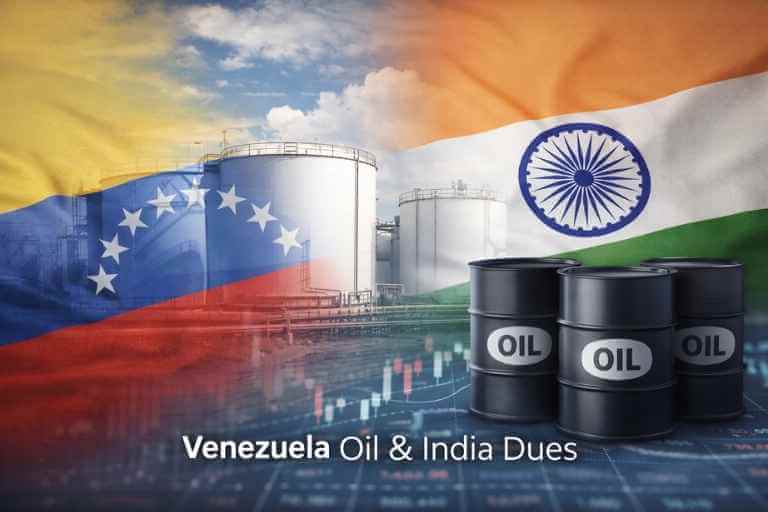
A potential US-led control or restructuring of Venezuela’s oil industry, the contact adds could release some $1B in long-stuck dues to India and bring back on track its jammed crude production, offering an economic fallout for Asia from geopolitical changes taking place within the energy sphere in Latin America’s largest nation.
State-run and connected entities from India, like ONGC Videsh Ltd (OVL) the overseas arm of Oil and Natural Gas Corporation (ONGC) have a stake in Venezuelan oil fields such as San Cristobal field.
These assets have become plagued with falling output and frozen dividends, thanks to long-standing US sanctions and Venezuela’s economic collapse that blocked settlements on the claims for profits and dividends.
Why US Control Might Make a Difference
In the present situation, Venezuelan funds the state has not paid OVL about $536 million due to it for dividend on a 40 per cent stake by 2014 and the same amount for subsequent years adds up to almost $1 billion of unpaid dues.
The payments continue to be held back, in large part because Caracas has refused to allow independent audits that are required under international investment norms, essentially putting the claims into a kind of deep freeze.
Industry analysts say that if the United States were to seize control of or aid in restructuring Venezuela’s ailing oil sector an outcome raised in some geopolitical circles they could lift sanctions. In this way, stalled projects could be revived and overdue payments could finally get cleared.
Impact on Oil Production
India was a leading importer of Venezuelan heavy crude up until around 2020, before sanctions closed that off; at peak levels it processed more than 400,000 barrels per day. But US curbs on technology, services and equipment sharply crimped output and exports from Venezuelan fields in which Indian companies have stakes.
The San Cristobal field, for example, was said to drop output to a mere fraction of what it could produce from tens of thousands of barrels per day to much lower rates largely because of a lack of investment and technical help.
If the restrictions eased under new management or an oversight regime, production potentially could be restored to higher levels with rigs and technology from India and other partners.
How India Could Benefit
OVL could possibly use the assets that it commands, such as rigs similar to those in Gujarat which have moved over to Myanmar, among others, to increase output if sanctions are eased and oil operations start afresh. It is a move that could help India realize its unpaid dividends and outstanding dues while offering a strategic supply of crude to the Indian refiners.
“To have the sanctions lifted and see Venezuela back in the re-open market for crude oil is going to take specific licences or approvals by OFAC (Office of Foreign Assets Control) which are more than likely, if they come to pass, would follow those kind of things we’ve done before such as waivers,” one industry source told AFP on condition of anonymity.
Restrictions on India’s oil buying have remained a key issue in the South American country, with Western and Indian trade sources telling Reuters that some level of output resumption at San Cristobal was crucial for any further negotiations.
Apart from fining new legal paths to settle arrears, fresh production from an array of other Venezuelan oilfields entwined with Indian partners such as Carabobo-1 area fields may help deepen energy ties and provide more stable auditoriums to refiners in India.
Geopolitical and Economic Implications
The possible release of money and production assets is an example of how global geopolitics can intersect with energy markets and national economic interests. Once one of the largest in the world, Venezuela’s oil industry has faced severe downturns because of political instability and sanctions.
A change in control or oversight could also reconfigure export flows and affect global oil prices, although such shifts come with significant diplomatic and legal complications.
The fight also underscores India’s broader struggle to extract returns from its overseas energy investments in treacherous regions. As a US-centric scenario this is all speculative and depends on political processes, but it demonstrates how external intervention can open the door to economic solutions.
- Also Read: Emergency Declared in Venezuela After US Strikes Trigger Explosions, Panic Caught on Video
India’s aggressive push on overdue payments from Venezuela demonstrates the broader problem of getting returns on overseas energy investments in unstable locations. Although the situation of US dominance is hypothetical and would, of course, depend on political events it reflects how outside interference can open up economic possibilities.
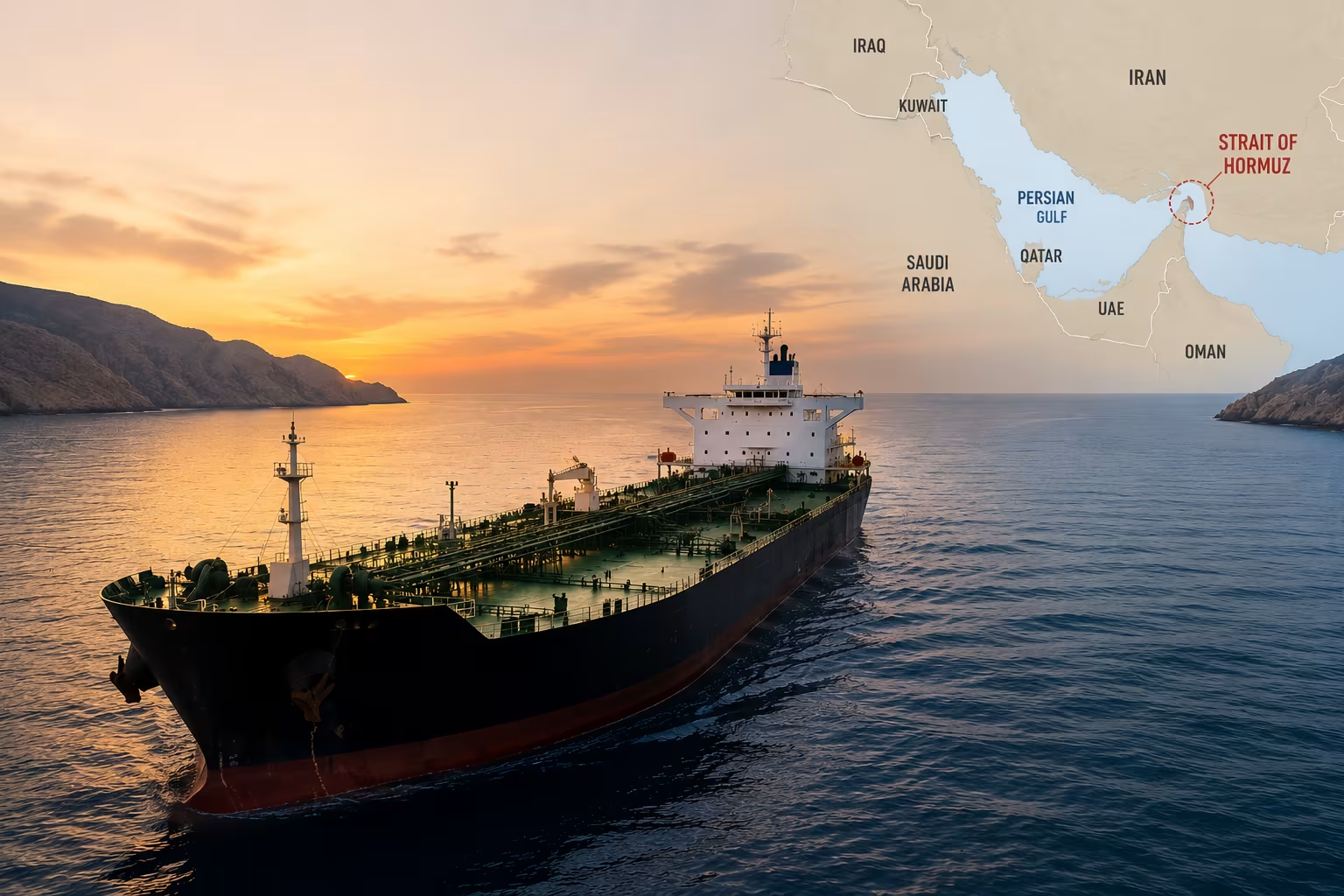
Image credit: OpenAI (Representative image)