

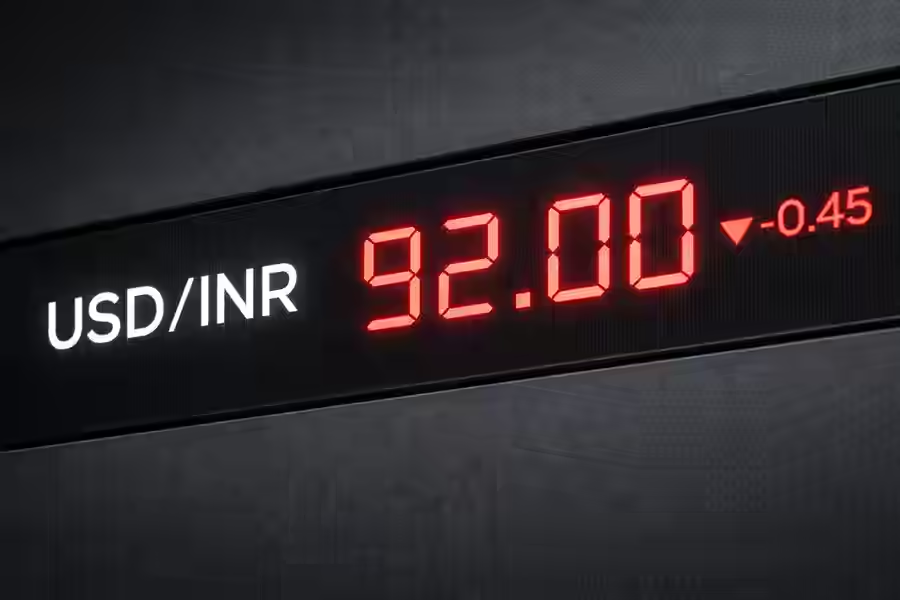
The Indian rupee fell to a fresh record low of 92.00 against the U.S. dollar in early trade on Thursday, January 29, 2026, pressured by persistent dollar demand and a cautious global market environment. The decline comes amid renewed strength in the greenback and rising geopolitical tensions that have dampened investor appetite for emerging market currencies.
At the interbank foreign exchange market, the rupee opened at 91.95 and slipped further to trade at 92.00 against the American currency, down 1 paisa from its previous close. Traders attributed the fall partly to month-end dollar demand from importers, which has kept pressure on the domestic unit.
The currency had already ended Wednesday on a weak note, settling 31 paise lower at 91.99, matching its lowest-ever closing level. Earlier, on January 23, the rupee had touched an all-time intraday low of 92.00 against the dollar, underscoring sustained pressure on the Indian currency.
Forex dealers said the latest bout of weakness followed a rebound in the dollar index after the U.S. Federal Reserve decided to keep interest rates unchanged at its first policy meeting of 2026. The Fed’s stance signaled confidence in the U.S. economy and reduced expectations of immediate rate cuts, supporting the dollar and weighing on other currencies.
Rising geopolitical uncertainty has also increased risk aversion in global markets, further hurting emerging market currencies such as the rupee. Concerns over global supply disruptions have pushed crude oil prices higher, adding to India’s external vulnerability.
“This steady capital drain has kept dollar demand elevated,” said Amit Pabari, Managing Director at CR Forex Advisors. He noted that oil prices have risen more than 4 percent this week, extending gains for a third consecutive session to levels last seen in late September.
The rise in crude followed U.S. warnings of potential military action if Iran fails to reach a nuclear agreement, heightening fears of supply disruptions. Brent crude, the global oil benchmark, was trading about 1.3 percent higher at USD 69.30 per barrel in futures trade.
As a net oil importer, India remains particularly vulnerable to sustained increases in crude prices, which widen the trade deficit and increase demand for dollars.
Meanwhile, the dollar index, which tracks the greenback against a basket of six major currencies, was quoted slightly lower at 96.16, though still strong enough to keep pressure on the rupee. Market analysts said the 92.00 level will be crucial in the near term. “With USD/INR hovering near 92.00 in the non-deliverable forward market, this level remains a key pivot.
A sustained move above it could open the door toward 92.20 to 92.50, but Reserve Bank of India support and a broadly softer dollar backdrop may cap the upside and gradually pull the pair back toward 91.00 to 91.20,” Pabari said.
Domestic equities mirrored the cautious mood. The BSE Sensex fell 343.67 points to 82,001.01 in early trade, while the NSE Nifty declined 94.2 points to 25,248.55. However, foreign institutional investors were net buyers on Wednesday, purchasing equities worth Rs 480.26 crore, according to exchange data.
Also Read: Federal Reserve Keeps Interest Rates Unchanged Despite Trump’s Calls for Cuts
On the macroeconomic front, India’s industrial production offered a bright spot. Government data released on Wednesday showed industrial output grew 7.8 percent in December 2025, its fastest pace in over two years, driven by strong performance in manufacturing, mining, and power sectors. In comparison, factory output had expanded 3.7 percent in December 2024.