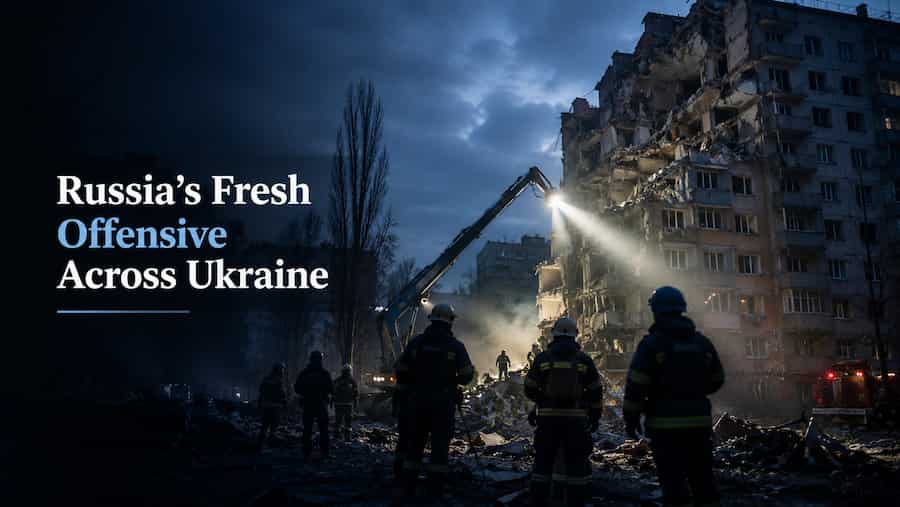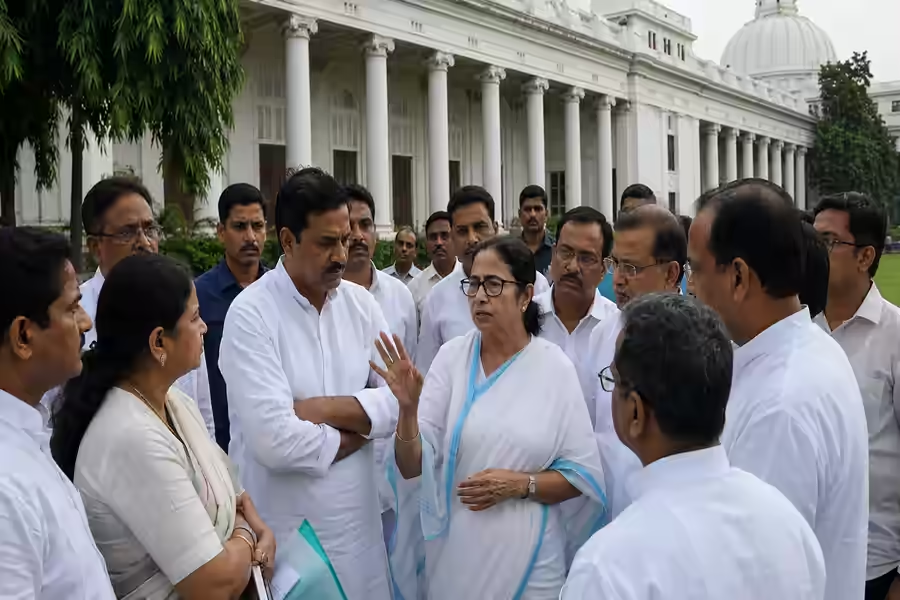

Speaking to Fox Business on the fringes of the World Economic Forum (WEF) in Davos, Bessent gave important updates on Senator Lindsey Graham’s Russia Sanctions Bill, which aims to impose 500% tariffs, including its intended targets and the legislative process.
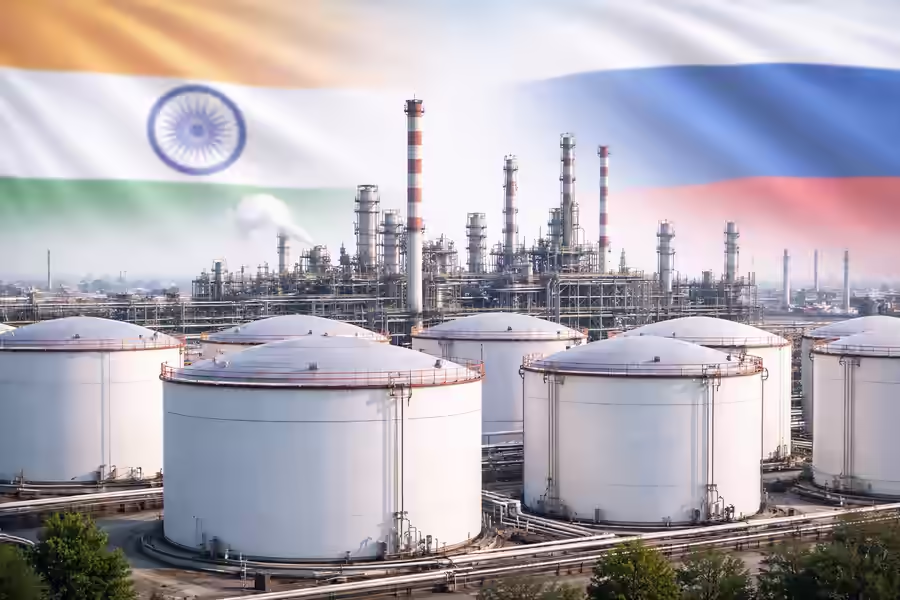
Following the imposition of a 25% tax by US President Donald Trump on nations who import oil from Moscow, U.S. Treasury Secretary Scott Bessent has asserted that India has “stopped” purchasing oil from Russia.
India now faces 50% tariffs from Mr. Trump, of which 25% are related to its purchases of Russian oil.
“India started buying Russian oil after the (Ukraine) conflict began, but President Trump put a 25% tariff on them, and India has geared down and stopped buying Russian oil,” Mr. Bessent stated in an interview with Fox Business.
US Treasury Secretary says India has stopped buying Russian Oil, India maintained that its energy strategy is driven by its own national interest, calling the U.S. move “unfair, unjustified, and unreasonable.”
Bessent made fun of Europe while claiming that India had ceased purchasing Russian oil, stating, “We have Europe buying Russian oil, still, four years later.” They are funding the conflict with themselves.
“China is a very large buyer of Russian oil, as they are of Iranian oil,” Bessent stated in reference to Beijing.
Senator Lindsey Graham’s bill would impose a 500% tariff on the secondary acquisition and resale of Russian oil. The Senate Foreign Relations Committee has almost universal support for the idea.
Speaking about the Bill, Mr. Bessent stated that Senator Graham’s proposal is in front of the Senate and that “we will see whether that passes.” The Senate wants to provide President Trump such authority, but we don’t think he needs it and can accomplish it under IEEPA.
Additionally, Mr. Bessent accused Europe of supporting Russia’s war on Ukraine and purchasing Russian oil.
Regarding the status of the bill, Bessent stated, “Senator Graham has a proposal in front of the Senate on the 500% tariff on the buyers of Russian oil, and we will see whether that passes.”
He said, implying that Trump might impose the tariffs on his own, “We don’t believe that President Trump needs that authority, that he can do it under IEPA, but that the Senate wants to give him that authority.”
The bill’s sponsor, Senator Graham, stated in October of last year that 85 US senators were prepared to grant Trump the power to put 500% tariffs on Chinese imports in exchange for Russian oil purchases.
Senator Graham then stated that the bill would give Trump “tremendous leverage against countries like China, India, and Brazil to incentivize them to stop buying the cheap Russian oil that provides the financing for Putin’s bloodbath in Ukraine” when he made the bill’s details public on January 8.
The Centre for Research on Energy and Clean Air (CREA) reports that after Reliance Industries and state-owned refiners drastically reduced crude oil imports in December, India dropped to third place among consumers of Russian fossil fuels.
After Western nations avoided Moscow after its invasion of Ukraine in February 2022, India, the third-largest oil consumer in the world, became the major buyer of cheap Russian petroleum.
What India has said on the proposed tariffs?
The Ministry of External Affairs (MEA) of India stated that it was aware of the bill under debate and was keeping an eye on events after Senator Graham made it public that the bill attempted to target India, among other countries.
Also Read: L’Oréal to Set Up Global Tech Hub in Hyderabad With ₹3,500 Crore Investment
Earlier this month, MEA spokeswoman Randhir Jaiswal had stated, “We are fully aware of the proposed bill being discussed, and we are carefully monitoring all related issues and developments connected with it.”
“We take into account the conditions and environment in the global market, while also keeping in mind our imperative of ensuring that energy is made available at affordable prices to our 1.4 billion people,” he said in reference to India’s approach to the energy issue. We choose our approach and policy based on these considerations.