
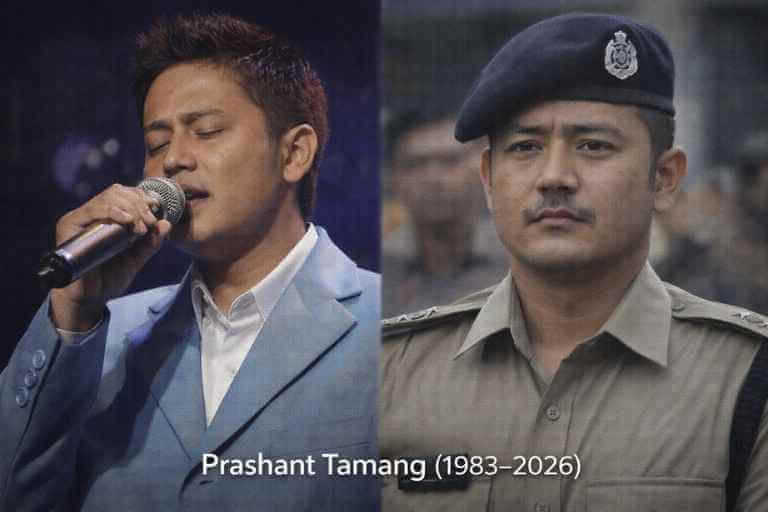
Prashant Tamang who rediscovered himself as an actor in Paatal Lok 2, has died of a sudden cardiac arrest, at the age of 43. Police says, family has no suspension of anyone. Although he reportedly slept comfortably, he did not wake up in the morning. His family rushed to the hospital where he was declared dead.
The 43 year old singer, who rose to fame with his soulful voice and heartfelt, became a huge sensation in West Bengal.
West Bengal Chief Minister Mamata Banerjee condoled the death with a post on X that read, “Saddened by the sudden and untimely demise today of Prashant Tamang, the popular singer of ‘ Indian Idol’ fame and an artist of national renown.
His roots in our Darjeeling hills and one-time association with Kolkata Police made him particularly dear to us in Bengal. I convey my condolences to his family, friends, and countless followers.
He continued to be a well-known personality in entertainment and music after his victory. He gained recognition for songs like Asare Mahinama and Bir Gorkhali, which are considered cultural anthems by the Gorkha population.
Tamang’s reputation as a versatile artist was further cemented by his recent performance as Daniel Lecho in Season 2 of the television series Paatal Lok.
What is cardiac arrest?
Cardiac arrest happens when your heart stops beating or beats so fast that it stops pumping blood. During cardiac arrest, people collapse and become unresponsive. Symptoms start without warning, This is why people call it a sudden cardiac arrest.
SYMPTOMS AND CAUSES :
SYMPTOMS:
- Loss of consciousness (fainting).
- Heart palpitations.
- Dizziness.
- Lightheadedness.
- Weakness.
What happens right before cardiac arrest?
Before you faint, you may have other signs of cardiac arrest, including:
- Chest pain.
- Nausea and vomiting.
- Shortness of breath.
What causes cardiac arrest?
Conditions and situations that can lead to these abnormal heart rhythms are the underlying causes of sudden cardiac arrest. These include:
- Cardiomyopathy.
- Drugs for other medical conditions.
- Heart attack.
- Heart failure.
- Recreational drugs, like cocaine.
- Brugada syndrome.
- Long QT syndrome (LQTS).
- Severe illness or injury (trauma) with major blood loss.
DIAGNOSIS AND TESTS
The signs of cardiac arrest appear rapidly, giving little time for testing. The illness can be fatal in a matter of minutes. For this reason, rapid diagnosis is crucial.
A person’s symptoms are often the best way to diagnose cardiac arrest, especially if they:
- Are unconscious.
- Have no pulse.
- Aren’t breathing.
MANAGEMENT AND TREATMENT
How is cardiac arrest treated?
Sudden cardiac arrest is treatable and reversible. However, therapy for cardiac arrest must begin right away, no matter where you are. If therapy is initiated within the first few minutes following abrupt cardiac arrest, survival rates can reach 90%. Every minute that passes, the rate decreases by roughly 10%.
If sudden cardiac arrest persists for more than eight minutes without CPR, it may be lethal. Five minutes is all it takes to cause brain damage.
If you see someone experiencing sudden cardiac arrest, do this:
- Call 112 immediately.
- Start CPR (Cardiopulmonary resuscitation), CPR can save a life by using chest compressions to replace the heart’s pumping action. It keeps blood and oxygen circulating until help arrives.
- Use an AED (automated external defibrillator) if there’s one available. Using an AED is the best chance of helping a person survive.
When the heart stops, blood stops flowing to the brain and vital organs. CPR pumps blood, supplying oxygen to the brain.
Also Read: Who Is Pramila Srinivasan? The Zoho Founder’s Wife at the Heart of Divorce Case
This buys time until an ambulance arrives, In every institution, Government should promote the medical emergencies where the medical experts can come and teach everyone ”How we can save the lives of someone” with some basic medical education and steps.