
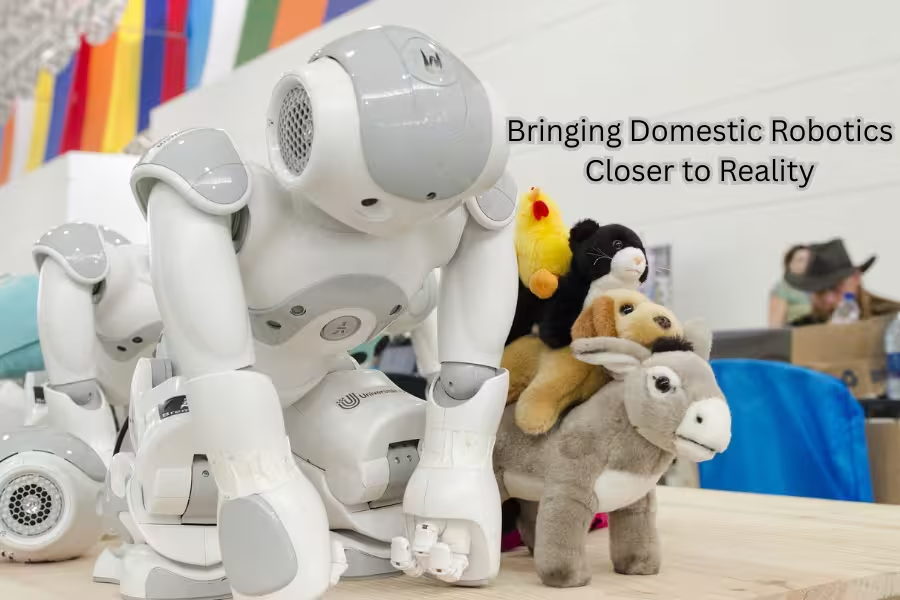
The integration of humanoid robots into daily life for residents of China has moved closer to reality due to a new trial involving the deployment of 100 AI robots in households. This project can be considered a breakthrough in efforts to implement the latest robotic technologies from the labs and industrial settings into the domestic space.
The SeeLight S1, also referred to as “Xiaoguang,” were designed by a Chinese robotics firm GigaAI. According to the sources, this group of robots has been used in model houses for the performance of various household chores, such as cooking, cleaning, doing dishes, laundry, sorting out clothes, etc.
A demonstration showed how the robot could perform the preparation of breakfast following voice commands, taking food items, warming them up in a microwave, and serving the meal within 8 minutes. Another robot was responsible for handling clothes, taking clothes from the washer, folding them and putting them in the closet. As developers noted, the training process lasted less than a month.
Meet "Seelight S1" – China's first general-purpose home robot launched in Wuhan. It cooks, does laundry, and folds clothes. Humanoid robots are officially moving from factories into our living rooms. pic.twitter.com/4AaBtklx3X
— Shanghai Daily (@shanghaidaily) May 22, 2026
Differently from robots which work following programmed orders, the SeeLight S1 uses embodied AI, allowing the robot to perceive and react to changes in the environment. The company claims that it enables robots to take decisions on the fly rather than performing only preset action sequences.
The country has been making aggressive investments in the development of humanoid robots with both the help of governmental support, research and also private enterprises. According to estimates from within the industry, Chinese companies accounted for the major share of total humanoid robots produced worldwide in 2025.
But at the same time, analysts point out that using robots at home is something much harder than utilizing robots in industrial facilities. The environment is chaotic, there is clutter in the house, and robots need to recognize a variety of items and interact with humans as well.
It is believed that the testing phase will give the manufacturers useful information on performance and reliability. Should they succeed in their project, robots would later help out with housework as well as other tasks requiring assistance.
Though autonomous robot assistants are not expected to become popular among regular consumers anytime soon, the launch of 100 humanoid robots into normal families’ homes could be viewed as the most notable test run of consumer robots so far. As technology advances, robots might be gradually becoming part of our everyday life.
Also Read: Despite ₹1.7 Lakh Income, Couple Struggles to Save for Dream Home