
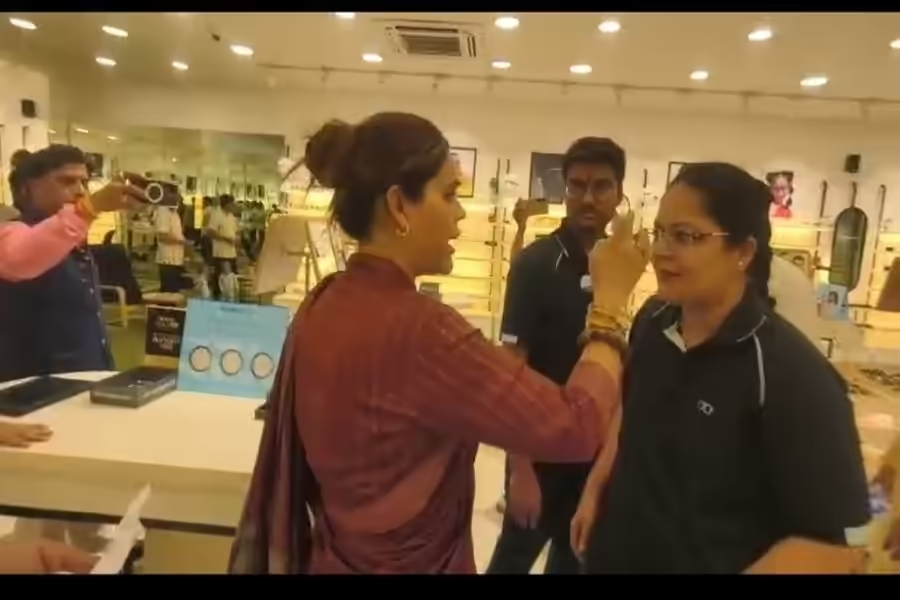
The dress code in the workplace at Lenskart was a new twist on Monday when the BJP minority morcha leader Nazia Elahi Khan walked into a company store in Mumbai and publicly applied tilak on employees.
The video-recorded incident that went viral on the Internet has fueled the discussion on the freedom of religion at the corporate workplace.
Confrontation in Mumbai Store
As witnessed by the footage of the scene, Khan walked into the outlet together with her crew and requested to see the store manager. In the process she asked the manager concerning the claims that Hindu employees were being discouraged to wear religious symbols such as tilak and bindi.
The owner of Lenskart has deliberately appointed Mohsin Khan, a member of the Ummah, as the store manager!
— Nazia Elahi Khan (सनातनी) (@ElahiNazia1) April 19, 2026
To prevent Hindu staff from wearing the tilak, kalawa and to stop following Hindu customs!
This is the strategy underway!
Immediately arrest the owner of Lenskart and… pic.twitter.com/m4CgG87dYq
The video depicts her requesting the members of staff to come forward and identify themselves and subsequently she put tilak on some of the employees. She also gave slogans and condemned what she termed as selective bans on the Hindu symbols.
The store manager, who is recognized in the video as Mohsin Khan, repeatedly refuted the claims and insisted that he was not imposing any restrictions.
History: The origin of the Controversy
The most recent update is following days of social media criticism of Lenskart in regards to a document allegedly being its internal grooming policy.
Tilak is your pride, Hindu!
— Nazia Elahi Khan (सनातनी) (@ElahiNazia1) April 19, 2026
Kalaava is your Sankar, Hindu!
Sanatan is your identity, Hindu!
The slogan of Har Har Mahadev is your pride, Hindus!
Work at Lenskart or Air India!
Wherever you live, or work never compromise your identity, Hindus!@CMOMaharashtra @VHPDigital… pic.twitter.com/QhYrrzi4In
The screenshots of the document indicated that there was a restriction in the use of some religious symbols, like tilak and bindi, whereas other types of religious clothing, such as hijab and turban, were allowed. This elicited an outcry of criticism among some of the users who were wondering whether the guidelines were fair.
The problem soon expanded to a broader discussion about inclusivity at work and the freedom of religion.
Company Clarification and Policy Revise
To address the backlash, Lenskart issued a clarification that the document circulating was old, and was not indicative of its current policy.
The company stated that its new policies are clear and unambiguous in embracing all signs of religion and culture in the form of:
- Bindi and tilak
- Sindoor
- Hijab
- Turban
Lenskart also offered an apology to any misunderstandings that might have been created by the previous communication and that the previous communication might have created misunderstanding among employees and the population.
Debate Continues Online
The controversy is not over even with the clarification. The video of the visit of Khan has also become a cause of discussion with opinions cutting both ways on the social media platforms.
Her moves have been supported by some users as a stand on religious identity, and have been criticised by others as a way of showing how to behave in the workplace and how employees feel.
General Workplace Faq.
Also Read: JEE Main 2026: 26 Students Achieve Perfect 100 Percentile Result
The event points to a greater challenge encountered by most organizations how to reconcile policies that are applied evenly in the workplace with the need to be mindful of diverse religious observances.
Although Lenskart has now repeated its inclusive position, the incident demonstrates how easily these issues can get out of control when there is a lack of communication and a negative image of the situation.
Also Read: JEE Main 2026 Cut-Off Analysis Reveals Rising Percentiles for Categories
In the meantime, the case is delicate and the company is likely to be under more scrutiny regarding the manner in which its policies are applied at the grassroots.
Also Read: