


Lenskart, an eyewear brand, has come under the harsh light of scrutiny following the publicity of a document purportedly included in their employee grooming policy, which went viral on social media. The scandal has triggered a broader debate on the topic of workplace policies and the expression of religion, and users have questioned the company and sought clarity.
The matter started to gain traction rapidly, with the document seemingly detailing the discriminatory permissions and prohibitions regarding religious symbols. Although the company has already taken action, the discussion on the Internet does not seem to decelerate.
Controversy on workplace regulations is prompted by viral document
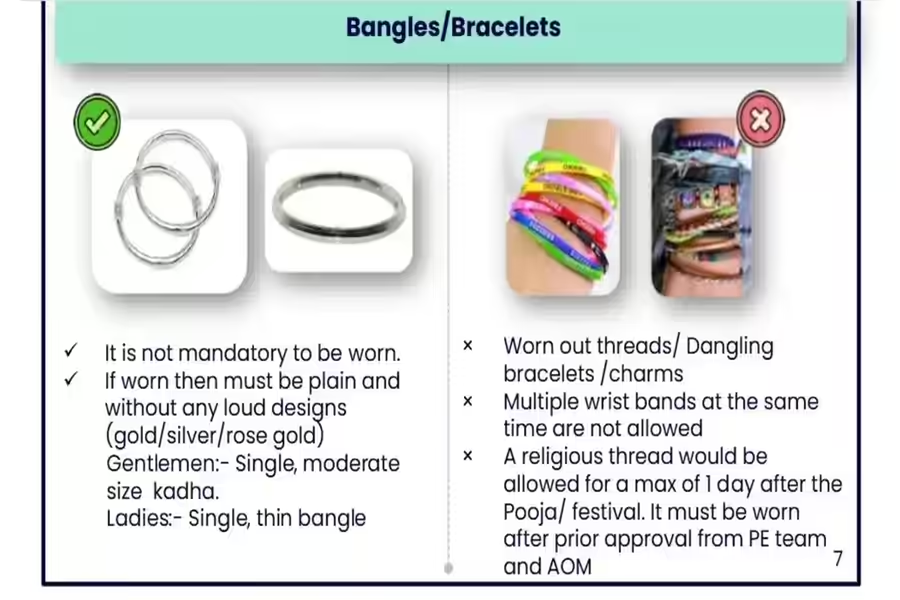
The scandal started with leaks of supposed internal policy document screenshots that began circulating online. The document allowed some religious wear, including black hijabs and turbans, to employees when they were on duty, according to what was widely shared.
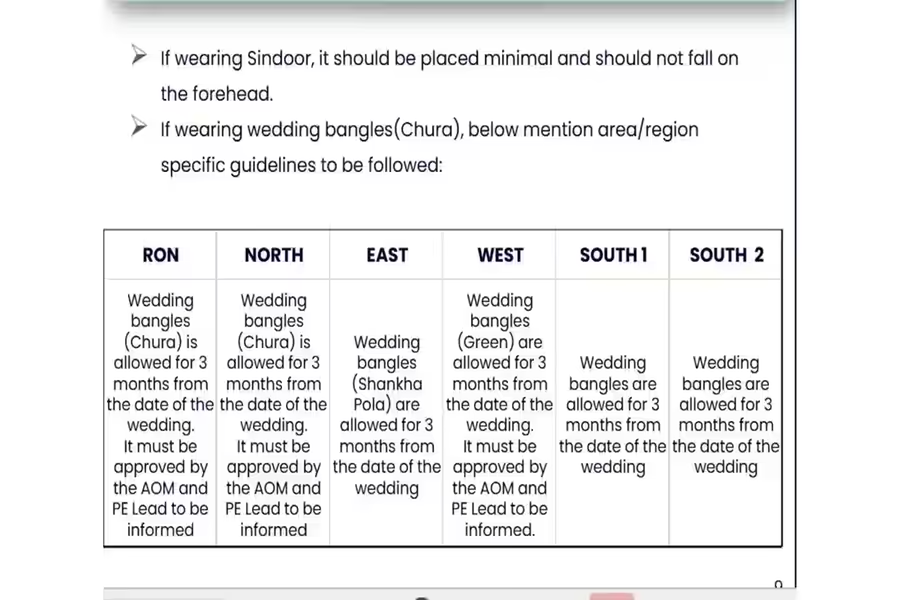
Nevertheless, other types of religious expression were allegedly curtailed by the same document. It mentioned that items like tilak, bindi or sticker-based forehead markings were not allowed. Even the traditional wedding bangles had their own rules, whereby they could only be worn on a restricted time after marriage and permission had to be granted by the senior staff.
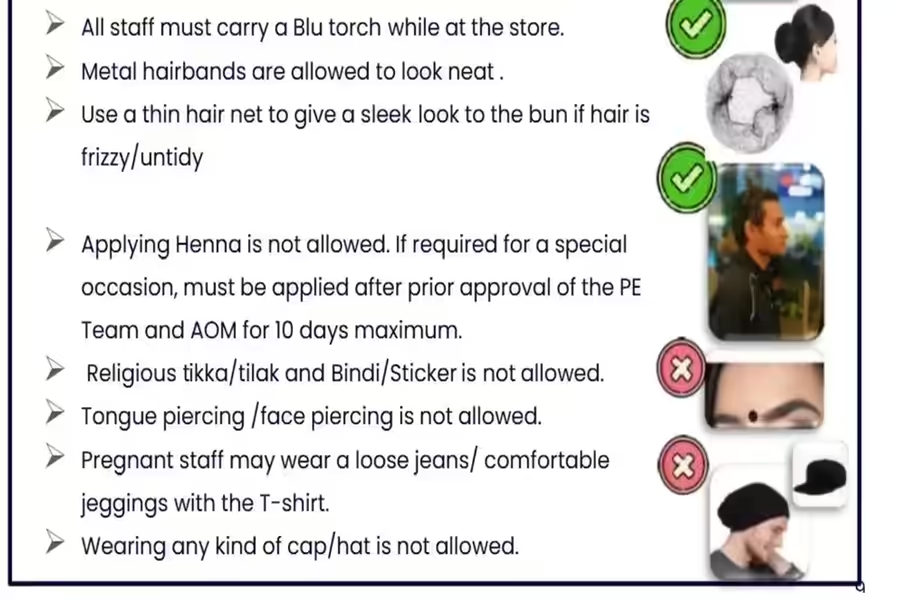
This seeming contradiction of rules was soon noticed. Most users noted that symbols such as bindi and tilak are usually used in daily life and it was surprising that there were restrictions on them and other religious identifiers were not restricted.
By making the document viral, this caused a wider debate on equality and equality in working policies particularly in a nation as diverse as India.
Founder retorts, titles document outmoded
As criticism increased, the Lenskart co-founder Peyush Bansal took to publishing the problem. He clarified the content of a document that was being circulated on social media in a post by stating that it is not the current policy of the company.
According to Bansal, Lenskart does not limit religious expression and that workers are at liberty to sport symbols like bindi and tilak. He also explained the viral document as outmoded and mentioned that the internal guidelines of the company have changed with time.
In recognition of the confusion created, he mentioned that previous versions of policies might not be representative of the current values of the organisation. The company, according to him, periodically examines its guidelines to be consistent with inclusivity and comfort amongst employees.
With this clarification, the answer given by Bansal has not resolved the issue completely.
Online debate continues despite clarification
Although the official statement was made, a number of users showed uncertainty about the explanation. It was unclear to many whether the document was indeed outdated or not, some would say it is as recent as early 2026.
Other people insisted that Lenskart should unveil its new policy publicly so that they can eliminate confusion. Other critics also contended that despite the age of the document, it still presented valid issues of previous practices as well as the manner in which this policy was its formulation.
The debate has now extended past one document, and has become a broader debate on the ways in which companies strike a balance between homogeneity and personhood in the workplace.
A bigger discussion on inclusiveness at the workplace
The event raises a common dilemma in business working environments: how to uphold a uniform policy and at the same time accommodate various cultural and religious ways of doing things. Such policies are commonly subject to examination in India where visible religious signs are an everyday aspect of life to many.
According to the experts, employers usually develop grooming policies to ensure a uniform brand image (mainly in customer-facing positions). But, perceived imbalance in such rules can easily cause a backlash, especially in the era of social media when internal documents are leaked within minutes.
Also Read: Ram Gopal Varma Questions Dawood Ibrahim’s Portrayal in Dhurandhar 2
In the case of Lenskart, the scenario highlights the use of effective communication. Although the company has refuted the applicability of the viral document, the call to have increased transparency indicates that the users want to have a more elaborate explanation.
Since the time of writing, Lenskart has insisted that its existing policy permits religious expression of freedom. But the company can still be pressured to officially release its revised guidelines in order to leave the scandal behind.
Also Read: Assam Class 12 Result Update 2026: Expected Date and Where to Check Scores
The episode is a reminder of how fast workplace policies can turn into a national concern, particularly when they are related to sensitive areas such as identity and faith. Both companies and workers need clarity and consistency so they can manoeuvre such situations.
Also Read: