
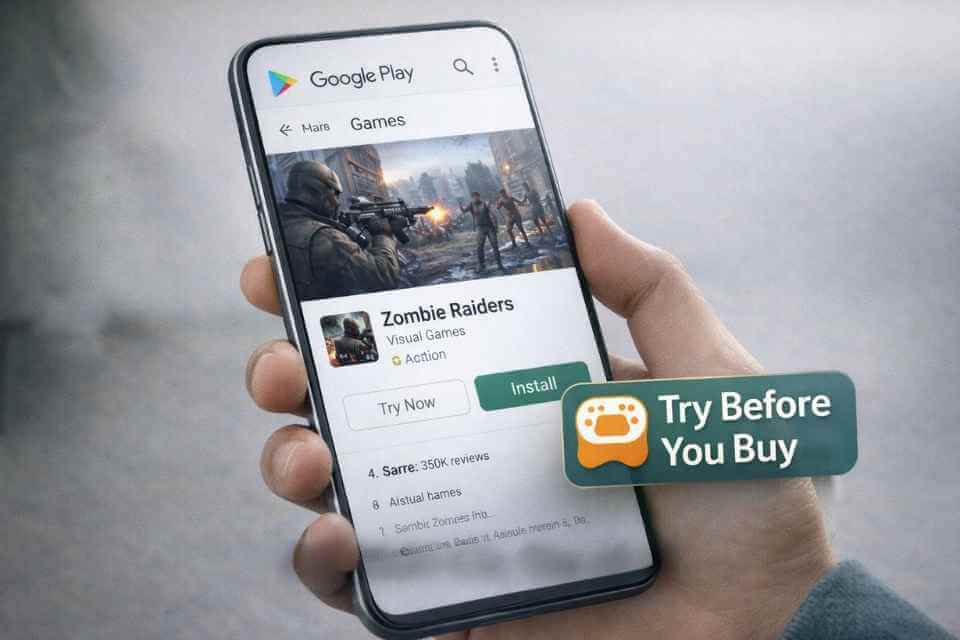
Google reportedly to introduce ‘try before you buy’ in Play Store Google could soon debut a “try now” button on its Play Store that will add a new dimension to the mobile gaming experience by providing users with the ability to play paid games for free without actually downloading them, thereby giving users the freedom of making an informed decision.
The new feature, glimpsed in early code references and policy changes, would let you play a game without paying upfront an approach that could be good news for both players and developers.
The goal is to drive down buyer reluctance by enabling people to test drive the main gameplay elements before putting money on it.
Now, gamers pay up front or sample short demos developers provide which does not always offer a true sense of the full experience. With a trial phase built into the Play Store, Google could ease discovery and satisfaction while also lowering chargeback requests and dissatisfaction.
What the Trial Feature Could Entail
While Google has not officially enabled the feature, tech commentators dissecting backend references within the Play Store think that the trial could function in one of several ways:
- Timed access to a paid game – playtime could be minutes or hours served as a “demo” for the actual game.
- Feature-gated demos – key mechanics available, extra modes paid for.
- full-access pass, with in-app purchase option included timely buy for those who want to continue playing
A trial model like this has already been used in some corners of the console and PC gaming worlds, but introducing it to mobile might also shore up confidence among users who are wary of buying sight unseen.
Why This Matters for Users
For a lot of players on the go, without a direct trial your options are limited to screenshots, short video ads or online reviews all formats that don’t necessarily convey whether you’ll actually enjoy playing. A direct trial could:
- Help users avoid disappointing purchases
- Minimize No refund (Collections) volume parties.
- Improve overall user satisfaction
- Increase transparency around game quality
And in some cases, users who try and enjoy a game are more likely to pay for expansions, in-app upgrades or sequels which is a win for developers too.
Developer Perspective
Game developers on the Play Store are meanwhile free to set their own refund policies, and Google permits refunds under some circumstances if asked for shortly after purchase. But continual refunds and chargebacks can result in administrative headaches for developers and revenue draining away.
If there were a trial system built in, developers could present their work for what it is and players would have a better sense of the product before committing to spending money on it. That, in turn, could cut down on squabbles and strengthen the bond between creators and players.
How It Could Work in Practice
Industry watchers are also guessing that Google might allow developers to opt in so they could offer trial programs when submitting games or updates. The trial system may include:
- Flexible trial period set by developers
- Refresh rate for purchase analysis on trials
- Choices to allow users to purchase from the trial screen
Details for how to implement it are still murky, but developers are likely going to need guidelines to follow in order to use the access fairly and without abuse.
Impact on Mobile Gaming Market
It could change the game, so to speak, how users interact with mobile titles by offering paid mobile games for free trial runs. Freemium games currently rule the charts, having in-app purchases as revenue drivers. Even paid games, with their complete content right there from the start, can find it challenging to attract players who don’t get behind the wheel themselves.
If it does, Google’s backing of pre-purchase trials might see to:
- Encourage higher-quality paid titles
- Provide smaller studios with a platform to feature games without aggressive discounting
- Move some of that money from in-app micro transactions back to the paid game up front models
A trial period would be a welcome change for customers frustrated with low-quality purchases.
Timeline and Availability
Thus far, Google has yet to announce a proper launch date or an availability schedule and the aforementioned trial option is purely speculative at this point based on code-line references and these internal clues discovered in more recent Play Store updates. If true, it might roll out first for a small group of developers or regions before spreading more broadly.
Gamers and developers are waiting for news from Google that is likely to come after announcements in its Play Console, developer blogs or big developer meetings later this year.
The ability for users to experience paid games before being required to purchase them could potentially be a significant game-changer when it comes to the mobile gaming industry, since it would lower the overall risk for gamers and in turn better serve developers who might use this feature as a way to penetrate their audience.
Who cares? As Android matures, anything that increases the clarity and trustworthiness of digital purchases should be good for the entire ecosystem.