

IMF head Kristalina Georgieva warned that artificial intelligence and AI based technological disruptions could affect an estimated 40% of the world’s workforce, with entry level jobs being most affected. She compared the paradigm-shifting change to a tsunami hitting labor markets.
She cited research supported by the International Monetary Fund and stated that while this percentage may rise to 60% in developed nations, it is expected to settle at 26% for India.
According to Georgieva, these numbers highlight the significance of policymaking in preparing people for the AI economy. To reduce the chance of people falling behind, this entails not just gaining specialized skills but also developing greater flexibility in how they are used.
Who gets squeezed? The category of jobs we worry particularly about, and there is evidence this is already happening, are entry level roles. These are usually tasks that can be easily automated… and what does this mean for young graduates looking for their first jobs?
Our judgment is that, in terms of suitable policies to prepare people for what is already here today, we are lagging behind (in) the demand of transformation that comes with AI, she stated.
India is currently home to the largest workforce in the world, and millions more join each year; between 2024 and 2023, for instance, that number was 19.01 million.
The oncoming ‘tsunami’ of artificial intelligence and AI based technology may now make the pressure on the federal and state governments to create jobs much more intense.
However, if implemented properly, AI and AI technology may increase India’s GDP by 0.7% a year, she claimed, putting the nation closer to its long term growth targets.
One of several prominent corporate leaders, entrepreneurs, and politicians attending this week’s India AI Impact Summit, the IMF chief said the meeting covered crucial topics in this area and commended Prime Minister Narendra Modi for his efforts to democratize AI.
Impact on India?
What is encouraging for the Indian economy, in my opinion, is that you have implemented significant structural changes in labor markets, taxes, and other areas to make India more competitive and ready for the AI world, where skill deployment must be flexible, Georgieva stated.
The head of the IMF also commended the nation’s corporate and financial sectors, calling them both sound and claiming to have fostered an atmosphere that attracts investment. Additionally commended were recently announced trade and tariff agreements with the US, UK, and EU.
Georgieva claimed that the economy has been incorporated into international supply chains as a result of these trade agreements and reforms.
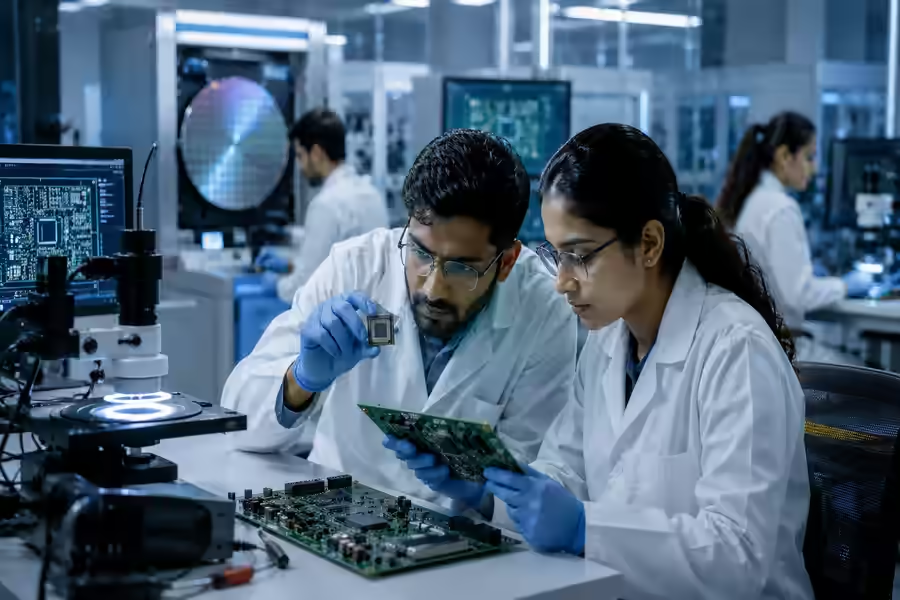
India is joining the US led strategic alliance Pax Silica in an effort to safeguard global supply chains for semiconductors and artificial intelligence while lowering reliance on non aligned countries.
That’s how you protect yourself from danger. All other things being equal, there are more jobs when growth is high; even if growth is only 1%, the number of employment created is still increased.
You have a much better chance of surviving the effects of the AI transformation when you are integrated into the world, she said.
The IMF chief stated that India is creating opportunities in every area, which is crucial. Digital ID and public digital infrastructure are really helpful. When I view India as an outsider, it is different from the India I visited ten to fifteen years ago. It is vibrant and full of economic potential.
Focus on education
The government needs to think about reforming education for the AI economy, she stated, emphasizing the importance of shifting attention to the education sector.
That is, learning to learn and be more adaptable in using these skills that is, becoming more open while also acknowledging that the world of services will grow as a result of artificial intelligence.
Also Read: You do sex work in massage parlours’, Delhi Couple Accused of Harassing Women from Arunachal
She proposed that this could play a significant role in compensating for possible employment losses, especially in entry level positions. According to her, international cooperation would also be crucial.
We are not powerless. Policies that assist us in adapting to the AI world are possible, but they won’t be effective unless we focus and collaborate in order to share knowledge.