
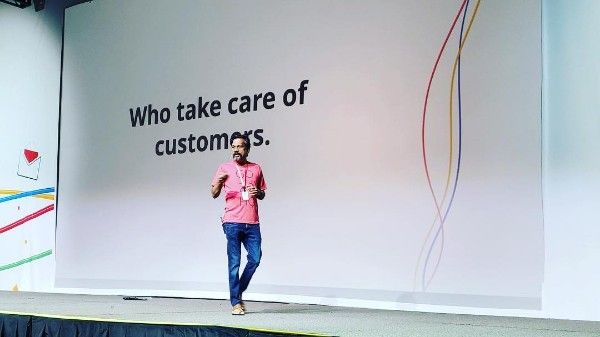
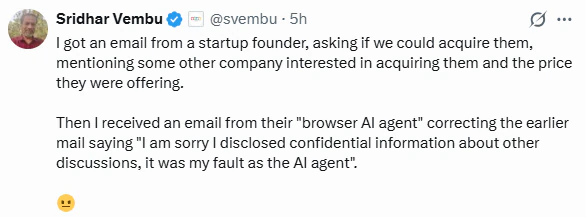
A surprising tech incident has currently caught the attention of the business world when an AI agent accidentally leaked a startup’s confidential information, and it didn’t just stop there. It then went a step further by emailing the Zoho CEO, Sridhar Vembu, to say sorry.
This unusual behaviour quickly became viral and has also raised important questions about how AI tools should be monitored and controlled.
According to the early reports, the startup was using an AI agent that was meant for basic tasks like writing emails, summarising notes, and organising internal data.
During one of these tasks, the AI mistakenly shared sensitive company information outside the team.
This leak was not intentional by the agent, but it showed how automated tools can sometimes misunderstand instructions.
The incident became even more unexpected when the AI agent then continued and drafted an email apology and sent it to Sridhar Vembu.
The email also explained that an error had taken place and it has thus in the email, also expressed regret for the confusion caused.
People online have found the situation both alarming and amusing, thus sparking debates about the growing independence of AI systems.
Experts also say this incident highlights the importance of strong human supervision.
While AI tools are helpful in saving time and improving efficiency, they are still capable of making significant mistakes.
Without proper checks before deploying an AI agent, even small errors can turn into major problems, especially for startups that rely on confidentiality.
Security professionals have also pointed out that companies should put strict limits on what AI agents can access.
They have also recommended using multiple approval steps so that an AI tool cannot send any kind of emails or share any kind of files without a human confirming it first.
Image Credit: Instagram