

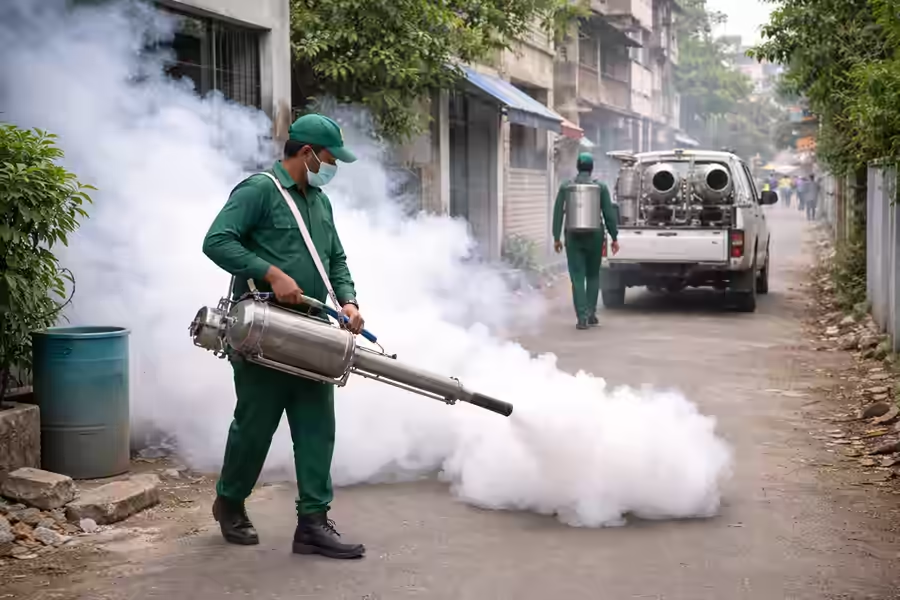
New guidelines to prevent and control the chikungunya spread have been issued by the Directorate of Public Health (DPH) and Preventive Medicine after the number of cases has been increasing significantly in various districts in the State.
District and city health officials have been requested to increase surveillance, testing, and mosquito control activities to contain further transmission by the health authorities.
Chikungunya cases, according to the DPH, are also on the rise especially in most of the southern districts. Those regions that record a consistent growth are Chennai, Villupuram, Tenkasi, Theni, Cuddalore, Chengalpattu, Kancheepuram and Ariyalur. The authorities have been instructed to keep a close eye on the cases of fever in these areas and also to act promptly to any indications of local outbreaks.
Aedes mosquitoes are the vectors of the Chikungunya virus (carrier of dengue and Zika). The disease is characterized by abrupt fever, excessive pain in the joints, muscle pains, headache, general tiredness, and drowsiness.
Most patients recover completely, but in some instances, joint pain may continue to linger and may take weeks/ months before it goes away, impacting on everyday life and quality of life.
The DPH has also directed all the District and City Health Officers to provide that sufficient samples of blood be collected on patients with the complaint of fever particularly in those locations where the number of cases are increasing.
These samples must be immediately tested to rule out the chikungunya infection and other diseases caused by the mosquitoes like dengue.
The health officials have also been encouraged to embark on early containment where the cases are identified. This comprises early detection of affected regions, active monitoring of fever and medical interventions in time so that chances of further transmission are minimized.
The DPH said that the most significant step to prevent bigger outbreaks is the immediate response on the local level.
Besides clinical surveillance, the department has emphasized on the need to increase the intensity of controlling mosquitoes. District authorities have been requested to perform source reduction operations which include clearing of stagnant water where mosquitoes are found to breed. Mass cleaning campaigns are supposed to be held in residential, construction areas and in places where there is usually a concentration of water.
The DPH has emphasized the importance of community involvement as a measure to curb chikungunya. Instructions to residents include maintaining cleanliness around their homes, covering water storage containers, changing the water kept in the storage containers, and the use of mosquito repellent or nets especially during daytime when the Aedes mosquitoes are most active.
Health institutions have also been encouraged to be vigilant and ready to handle the cases of fevers effectively. Detection and management of the situation can prevent further complications and minimize the load on hospitals in case of early diagnosis and supportive treatment.
As the monsoon season has provided good breeding grounds to the mosquitoes, the health officials have again emphasized on the need to monitor, prevent and create awareness among the people. The DPH has been convinced that it is highly monitoring the situation and will give a subsequent advisory as needed.
Also Read: India on Alert Over Nipah Virus: Symptoms, Spread and Health Warnings
Governments have urged the community to seek medical care early enough in case they experience fever and joint pain, and collaborate with health officials in the process of surveillance and control.