
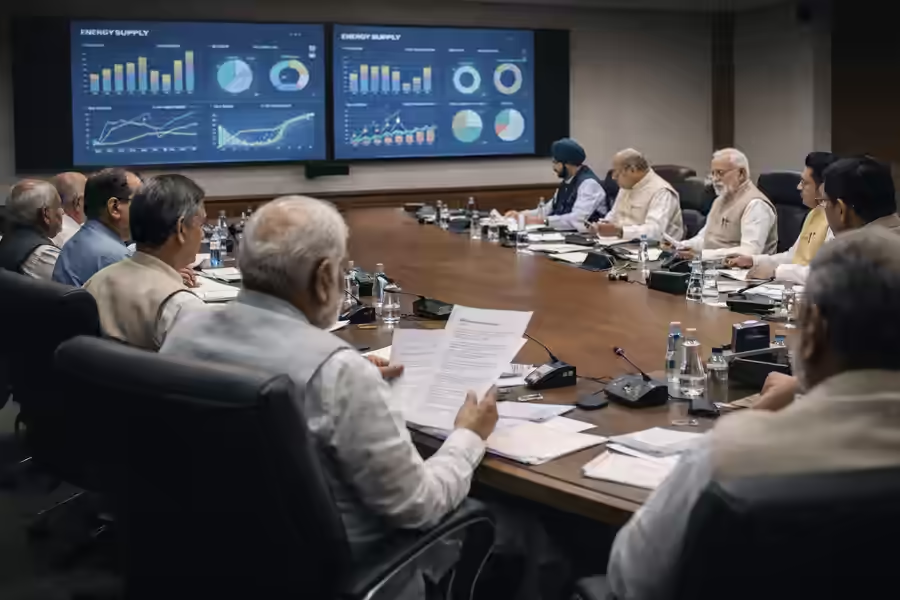
Prime Minister Narendra Modi was on Friday chaired a high-level meeting to discuss India’s energy and fertiliser supply situation in the backdrop of war in Iran, along with rising tensions in West Asia. The discussions covered crude oil, natural gas, power and fertiliser sectors as the government evaluated possible risks and made arrangement of contingency plans for supply delivery across the nation.
The review, part of the administration’s broader effort to assess all aspects of domestic and international oil production, comes amid volatility in global energy markets where geopolitical developments have unnerved investors, including disruptions in important shipping routes and uncertainty around oil and gas supplies.
Focus on energy security and supply continuity
The main concern for the government during the meeting was to ensure that India’s fuel and energy needs are not impacted due to global tensions. During the meeting, officials reviewed the availability of crude oil, LPG and supply of natural gas and electricity besides stocks of fertiliser needed for agricultural operations.
The government is actively monitoring the situation and taking steps to protect energy security, officials said. The meeting stressed stable logistics and facilitating the transportation of provisions nationwide.
Senior ministers, including from oil, defence, finance and external affairs, attended the meeting along with top officials of several key ministries to show the seriousness of the situation.
Fears Of An Iran War Are Spiking Global Energy Prices
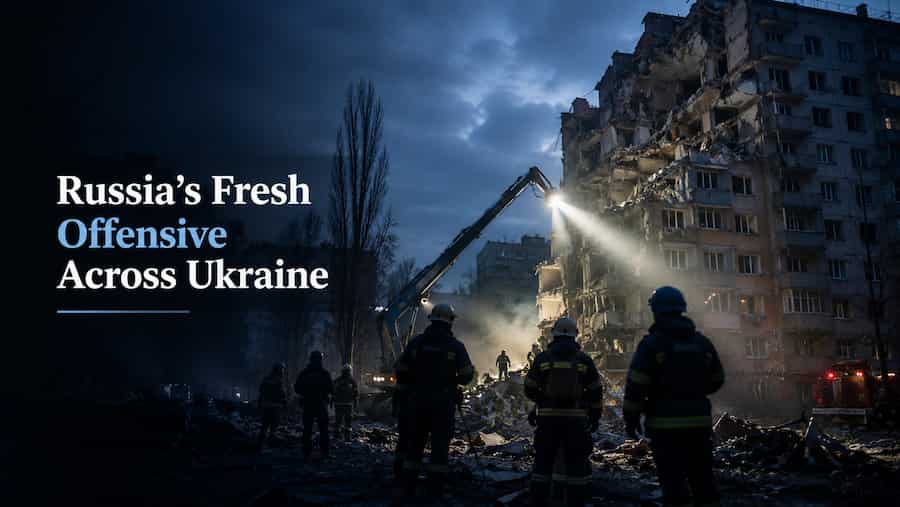
The escalating conflict in West Asia has posed a long-term fear for the entire world, particularly with respect to energy supply chains given that the region is crucial for oil and gas exports. The Strait of Hormuz, a major maritime path for oil shipments to the world, remains one point of anxiety.
A cut in this route can impact the international crude oil prices substantially, which in turn drives domestic fuels rates for countries like India that imports heavily.
Officials are monitoring global developments closely to analyze possible ramifications for India’s energy imports.
Measures to ensure uninterrupted supply
In the immediate term, authorities are moving to ensure stable cyclopropane supplies of LPG and other fuels. Keeping in view check on black marketing and hoarding, Government has enhanced LPG allocation in some pockets.
Officials have also said port operations are normal, and logistics networks running without major disruption. The aim is to ensure timely delivery of fuel and other essential commodities in the country.
The government is also evaluating distribution systems to make sure there are no bottlenecks that could result in scarcity.
Coordination across ministries
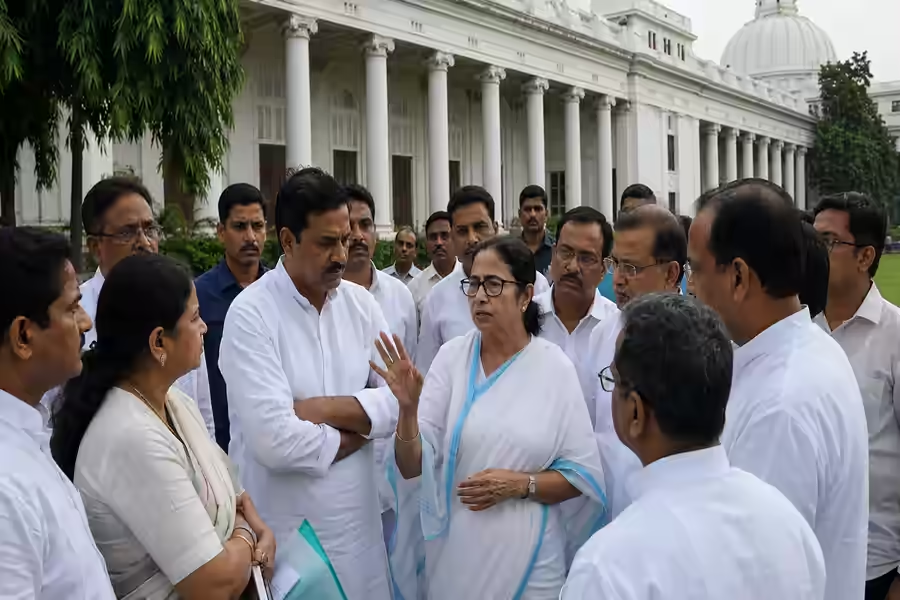
The top-level meeting underscored coordination between multiple ministries to tackle the developing situation. Energy security was multi sectoral not only from petroleum but included power, transport and agriculture.
This is to bring together ministers from different departments to ensure a similar response in the face of possible challenges stemming from the global situation.
Experts say that kind of coordination is critical at times of uncertainty, when shocks in one sector can create domino effects into other areas.
Impact on consumers and industry
For consumers and industries, stable fuel supply is very important. Petrol, diesel, LPG and electricity are inevitable in our life as well as economic activity.
Any major disruption could drive prices up, cause supply shortages and have wider economic consequences. The government must take the initiative to avoid such scenarios and keep domestic markets steady.
For some industries, particularly manufacturing and agriculture, constant oxen availability of energy and fertilisers is critical for normal operations.
India’s strategy amid global uncertainty
India has been striving to diversify its energy sources and enhance strategic reserves to not rely on any single region.
The situation now illustrates how vital such strategies are. The government seeks to safeguard local interests by keeping several supply routes and observing developments worldwide.
Experts suggest that the clearer India’s path is through balancing imports, reserves and domestic production, while navigating global uncertainties, the better.
As the Iran war continues to evolve, with it the job at hand for India’s government is also how not to allow a disruption of essential supplies. Regular monitoring and interventions are hoped to ensure stability in the energy and fertiliser sectors.
The Prime Minister-moderated meeting indicates a proactive and determined approach to managing possible risks emerging from global geopolitical tensions.
Currently, officials have described the country’s energy and fuel supply scenario as stable, with steps in place to handle potential challenges ahead.