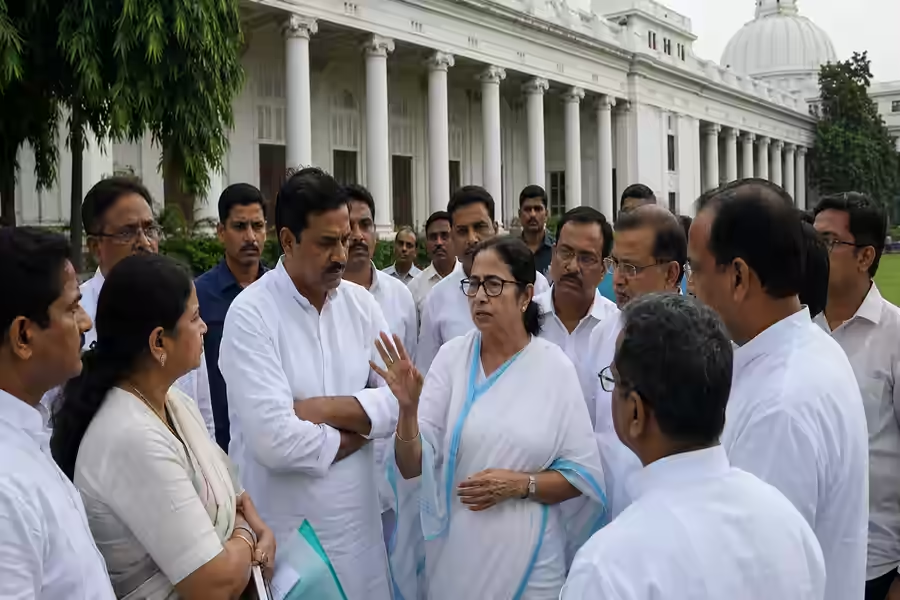

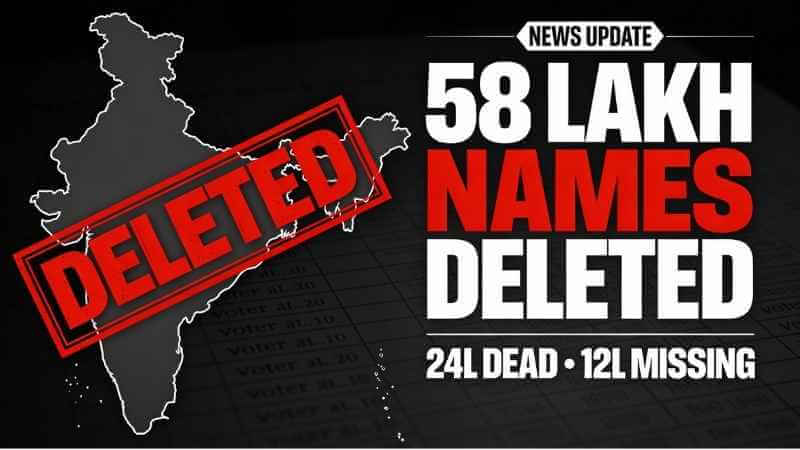
Large-scale deletions marked West Bengal’s draft Special Intensive Revision (SIR) of electoral rolls as officials announced that more than 58 lakh names have been dropped due to deaths, missing and other verification problems.
The Special Intensive Revision (SIR) of electoral rolls in West Bengal has witnessed a major clean-up of voter data as over 58 lakh names have been deleted from the rolls, according to draft SIR published on Tuesday. Election officials said the deletions came after verification drives showed many voters were either dead, untraceable or no longer eligible.
According to the draft data, there were 24 lakh voters listed as dead and nearly 12 lakh names tagged missing or untraceable. Pollard’s coverage of nonmatching deletions, which may occur due to duplication, migration or voters changing their registration address without informing the SOE valid for certain extensions.
The SIR exercise: why was it performed?
The Special Intensive Revision is conducted from time to time, as a mechanism to maintain the accuracy and currency of the electoral rolls. Generation of a clean voter list is widely believed to be crucial towards preserving the credibility of an election in a high-mobility, hard-fought electoral setting such as West Bengal.
Officials involved in the process said that it was an exercise in door-to-door verification, cross-checking of government databases and feedback from local authorities. The purpose was to delete worthless entries, while not purging valid voters.
Break-up of deleted names
The three main reasons for the mass deletions are illuminated in the draft list:
- Dead voters: An estimated 24 lakh names were deleted after cross-verifying with death records
- Untraceable /missing voters: Close to 12 lakh persons untraceable inVerification
- Other cause: The rest of the deletions are multiplicity purges, permanent migration and voters transferring to other constituencies.
Election officials said this is a draft list and numbers could change after claims and objections are processed.
Political reactions begin
The leak of the draft SIR is already causing political ripples throughout the state. Opposition parties have warned that the volume of deletions suggest real voters could be cast out by mistake.
Leaders of the ruling party, however, have defended the process, saying that an open verification system is good for democracy and prevents fake voting. They have asked voters to cross-check their name in the draft list and file objection if necessary.
What voters should do now
The election authorities have appealed to the people to check their records thoroughly in the draft electoral roll. The voters, whose names are omitted or wrongly marked can file claims and objections within the duration of notice inviting applications.
The correction window allows:
- Re-inclusion of names wrongly deleted
- Correction of personal details
- Addition of address updates as voter has moved from one location to another
Authorities emphasized that no permanent deletions will be official until the objection procedure is done.
Impact ahead of elections
The timing of the SIR exercise is crucial as West Bengal gears up for elections in future. Clean, accurate voter rolls are critical for free and fair elections, but sweeping updates can be politically sensitive.
While it may be justified to clean up the data, such transparency and ready access in correction is just as important if public trust is not to be eroded. The sense of slight could blow up into a significant political issue if not handled carefully.
What happens next?
The draft SIR list will remain public for a defined period of time. After those who have raised objections and made corrections, the Election Commission of India will publish the final electoral roll, which would be used during elections.
Until that happens, officials say voters shouldn’t panic and need to be part of the verification process to ensure the integrity of their voting rights.
Image credit: AI