

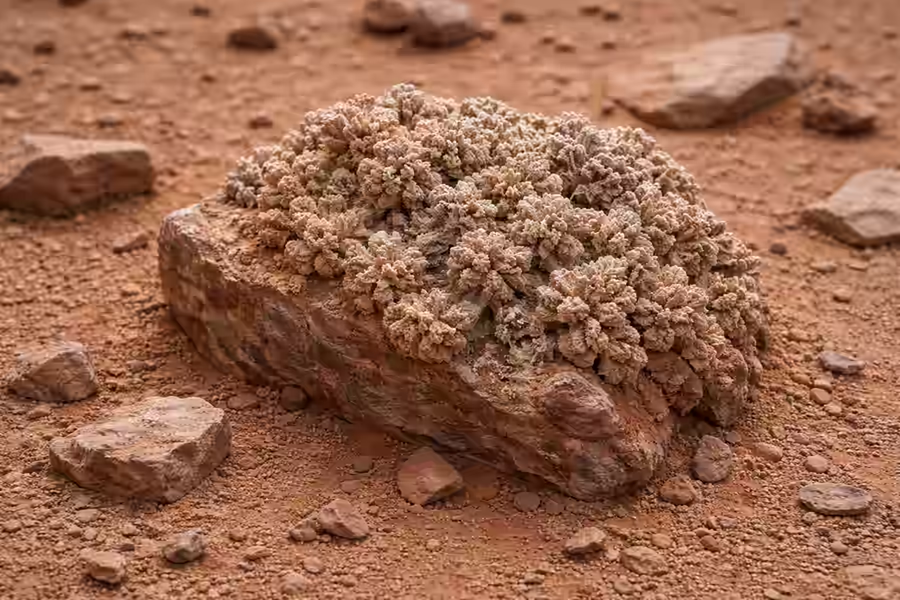
A close-up photo of a tiny rock on Mars that has drawn notice due to its coral-like look was returned by NASA’s Curiosity rover. The formation, which is only a few centimeters across and was shot during normal surface work, adds to the rover’s growing list of intriguing geological characteristics. The shape, according to scientists, indicates physical processes that formerly involved liquid water but is not proof of life.
The picture complements Curiosity’s ongoing mission to interpret Mars’ layers, rocks, and textures. The discovery doesn’t stand alone; rather, it quietly stands among years of comparable observations that collectively contribute to a picture of the planet’s evolution. It adds weight even though it isn’t particularly striking.
NASA’s Curiosity rover finds coral-shaped rock on Mars
Curiosity’s Mars Hand Lens Imager, which was attached to the end of its robotic arm, was used to photograph the rock. Surface features were vividly visible because the camera was only a few centimeters away. The structure has been likened to coral since it looks branching and twisted. The appearance actually results from erosion rather than growth, according to researchers. The elevated shape is the result of wind removing the softer material surrounding the harder mineral deposits.
How water once shaped Martian rocks
The rock is thought to have formed billions of years ago, when liquid water was still present on Mars. Dissolved minerals were conveyed by water as it passed through rock fissures. These minerals solidified in place when the water eventually vanished. The surrounding rock was gradually removed by wind erosion. The mineral-filled structure that has been revealed and altered over time is all that is left. The same mechanism creates strange and occasionally delicate structures in deserts and coastal areas on Earth.
Curiosity’s long record of strange formations
Curiosity has recorded numerous rocks that appear strange at first after landing in 2012. Some have a flower-like appearance, while others are spheres or stacks with layers. Scientists are able to link the shapes to known geological processes each time.
The coral-like rock fits that pattern, which confirms current theories about water, minerals, and erosion but does not alter what scientists believe Mars was like. In the long run, these minor confirmations are more significant than one striking discovery.
Why small details still matter to scientists
The goal of curiosity is accumulation rather than surprises. The rover measures structure, chemistry, and textures at a slow pace. Such a rock aids in verifying the behavior of minerals on Mars. It also aids in the testing of climate and erosion models. Even when the reason is well-known, witnessing it occur on a different planet offers scientists assurance that their knowledge extends beyond Earth.
Mars exploration continues at a steady pace
The coral-shaped rock is unlikely to be revisited, and it won’t alter the course of Mars study. As always, curiosity will continue, exploring new territory and gathering more subtle details.
Also Read: Indian Army’s Bhairav Battalion: ‘Invisible, Invincible’ New Elite Unit for Swift Threat Elimination
These specifics throughout time create a more comprehensive record of a planet that gradually lost its ability to flow water over its surface. The narrative doesn’t happen all at once. In pictures like this one, it develops piece by piece.