
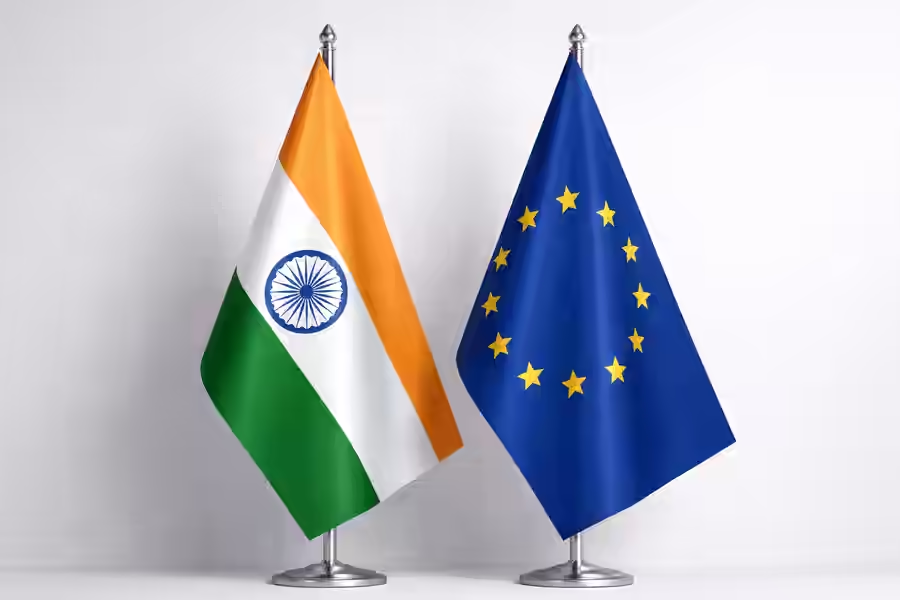
Following the completion of the Free Trade Agreement (FTA) between India and the European Union (EU), the country’s pharmaceutical and medical device industries are expected to experience significant growth.
According to the Ministry of Chemicals and Fertilizers, the deal opens up access to the EU’s $572.3 billion pharmaceutical and medical technology sector, which is one of the biggest and most regulated healthcare markets globally.
According to government officials, the FTA will improve India’s integration into global supply chains, provide employment possibilities, and solidify India’s status as a worldwide powerhouse for healthcare production.
The action is viewed as a major step toward bolstering India’s reputation as the “pharmacy of the world,” especially in light of the growing need for reasonably priced, superior medications and medical equipment worldwide.
It is anticipated to promote MSME involvement, spur domestic capacity growth, and assist industrial clusters in important manufacturing states. Experts warn that the deal’s success will depend on India’s capacity to meet Europe’s strict quality, regulatory, and compliance criteria, even while it opens up new markets and liberalizes tariffs. When taken as a whole, these advancements represent a critical turning point for India’s healthcare manufacturing sector.
What The India-EU FTA Means For India’s Pharma Sector
The India-EU Free Trade Agreement is anticipated to help pharmaceutical companies expand their operations, create skilled jobs, and strengthen India’s position as a dependable partner in the global healthcare supply chain, according to the Ministry of Chemicals and Fertilizers.
The ministry noted that the agreement will support:
- Expansion of skilled and industrial employment
- Stronger participation of MSMEs
- Deeper global supply chain integration
- Capacity expansion across pharmaceuticals, medical devices and allied sectors
JP Nadda, Union Minister for Chemicals and Fertilizers, emphasized the deal’s importance for high-value healthcare manufacturing. Access to the $572.3 billion Pharma and MedTech market in EU and liberalised tariffs for Indian medical devices will accelerate growth in this high-value sector,” Nadda stated.
The deal is in line with India’s larger goals for healthcare production, he continued. “Under the visionary leadership of PM Narendra Modi, India continues to expand its presence as a reliable global partner in healthcare and manufacturing,” added the minister.
A Strategic Partnership With Long-Term Impact
The India-EU FTA is being described as a major milestone in one of India’s most strategic economic partnerships. Designed as a modern, rules-based trade framework, the agreement aims to address current global challenges while enabling deeper market integration between the world’s fourth-largest and second-largest economies
Also Read: TikTok Influencer Alina Amir’s Viral MMS Deepfake Explained as She Breaks Her Silence
In addition to medicines, the agreement covers inorganic and organic chemicals, fertilizers, cosmetics, soaps, and detergents. According to officials, the accord will liberalize tariffs for important “Made in India” medical equipment and grant preferential market access to spur growth in high-value categories.
The ministry said the FTA would support:
- MSME cluster development
- Industrial capacity expansion
- Export-led growth in processing-intensive sectors
Significant benefits are anticipated for major manufacturing centers in Gujarat, Maharashtra, Karnataka, and Andhra Pradesh, especially coastal export hubs that can increase production and logistics to fulfill EU demand.
Opportunities Come With Higher Quality Expectations
According to industry analysts, the pact boosts expectations for Indian producers while also opening up a plethora of prospects.