

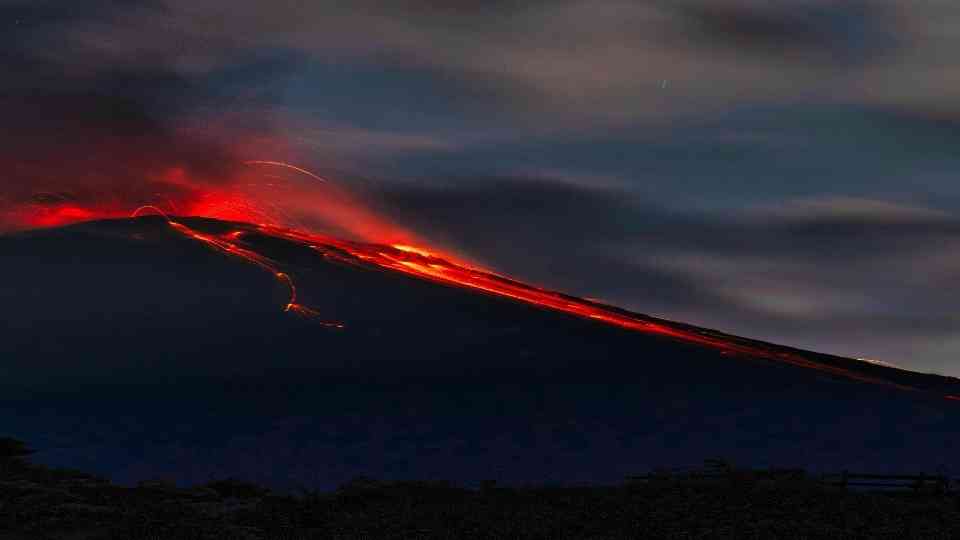
On Sunday, November 23, 2025 Hayli Gubbi volcano in Ethiopia erupted and this was the first time in approximately 10-12000 years.
It was explosive and burst out abruptly, and the columns of ash and sulfur dioxide rose up to the sky-high, up to 15 kilometers.
The ash volcano covered the Red Sea, the area of which was in Yemen and Oman, and was carried to the Indian subcontinent as well, reaching some parts of northern India.
A strong rumbling sound and a shockwave shaking the buildings scared the local residents.
There were no casualties, however, the ashfall has blanketed grazing lands and has had a devastating effect on livestock herding communities that could pose a long-term economic burden on the pastoralists in the area.
The eruption stopped after a certain period but the ash cloud is still under competent observation by the aviation authorities due to its possible interference with flight paths.
Hayli Gubbi, one of the Ethiopian volcanic ranges (Erta Ale) in the Afar region, is a shield volcano which has not recorded any eruptions in the modern history of eruptions.
Geologists attribute the eruption to tectonic in the East African rift where three tectonic plates come together to cause magma to be brought to the surface after thousands of years of slumber.
The volcano suddenly coming to life after many thousands of years of silence is a rare geological phenomenon, which has both local and geographically far-reaching consequences on air travel in the Middle East and South Asia.
The high risk associated with volcano eruptions in the air is evident in the fact that airlines in the area are keeping a close eye on the ash cloud in order to be safe during flight.
The residents explained that the experience was an explosion of smoke and ash where the sky was becoming black very fast and the earth shaking under their feet. The volcanoes are also a natural process that has occurred and affects the geology of the African continent.
Image credit: Wikimedia