
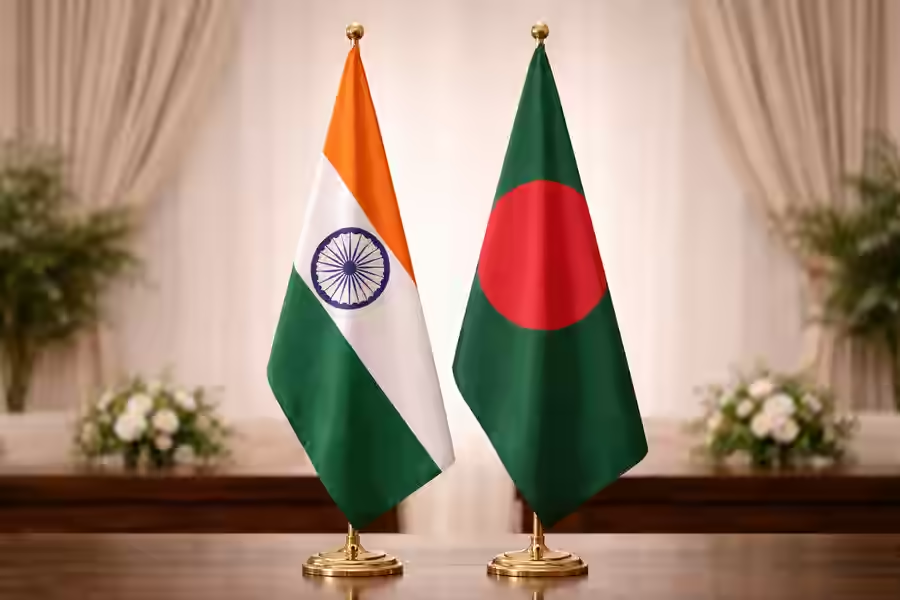
On Saturday, the Bangladesh Nationalist Party thanked Narendra Modi after the party leader congratulated the party after the party won the parliament elections in Bangladesh in a landslide last month. It is the exchange of messages, which is being viewed as the first indicator of the way in which Dhaka and New Delhi might want to head the bilateral relationship in the new political dispensation.
The BNP in a press release on social media was grateful to the Indian Prime Minister to admit the mandate it was getting under Tarique Rahman. According to the party, the victory was the demonstration of the confidence of people on its programme and on the democratic process.
Thanks, Honourable Narendra Modi, very much. We very much appreciate your recognition of the leadership that Mr Tarique Rahman exercised in ensuring that the BNP won the national elections. The statement was a measure of trust and confidence that the people of Bangladesh put in our leadership and in the democratic process.
The BNP underscored that it is resolved to democratic management, inclusiveness and national growth. The new government according to the party would strive to achieve progress that would benefit the citizens in both social and economic background with the strengthening of institutions.
Notably, the message also highlighted the value that the group gives to the relations with India. The BNP indicated that it would hope to work constructively with New Delhi even in coming years with constructive respect and sensitivity to the concerns of each other. It further added that the two nations have the same interest in ensuring that the wider region is peaceful, stable and prosperous.
This took place after Modi congratulated Rahman over bringing the party to what he called decisive mandate. The Indian Prime Minister in his message stated that the decision indicated the good faith of the Bangladeshi people in the leadership of Rahman and confirmed that India stood in support of democratic, progressive and inclusive Bangladesh.
Modi was also ready to collaborate with the new leadership to enhance collaboration and promote collective development agendas. India and Bangladesh have the long history of their active involvement in the trade and connectivity, energy, security and cultural exchange spheres, and the tone introduced by the initial diplomatic messages should be taken into account specifically seriously.
This election that took place on February 12 was a significant step in the changing political history of Bangladesh. It marked the first parliament vote since the 2024 dramatic upheavals that have left former Prime Minister Sheikh Hasina. The victory of the BNP, by far exceeding the number needed to construct the government in the 300 seat parliament, makes Rahman a prime minister in waiting.
Analysts feel that the size of the mandate would give the new government room to initiate reforms besides re-calibrating priorities in foreign policy as well. In the case of India continuity in cooperation on cross border connectivity, economic integration and security coordination is of the essence.
Diplomatic observers observe that the public statements of support of the New Delhi and the corresponding outreach of Dhaka can serve to keep the pace in bilateral activities which have grown significantly over the past years. Meanwhile, it is expected that the new government will juggle local interests and affiliations with regional alliances.
Also Read: Isha Ambani Turns Heads in Pastel Pink Bridal Lehenga Look
In the period when Bangladesh is on the verge of passing the leadership transition, the BNP-Modi exchange has brought a much needed dose of optimism. It is an indicator that both parties are ready to develop on the previous relations and seek new prospects of cooperation in a shifting political climate.
This initial goodwill, in the long-term, may determine the subsequent stage of the relationships between the two neighbours and have an impact on the situation in the entire South Asia.