
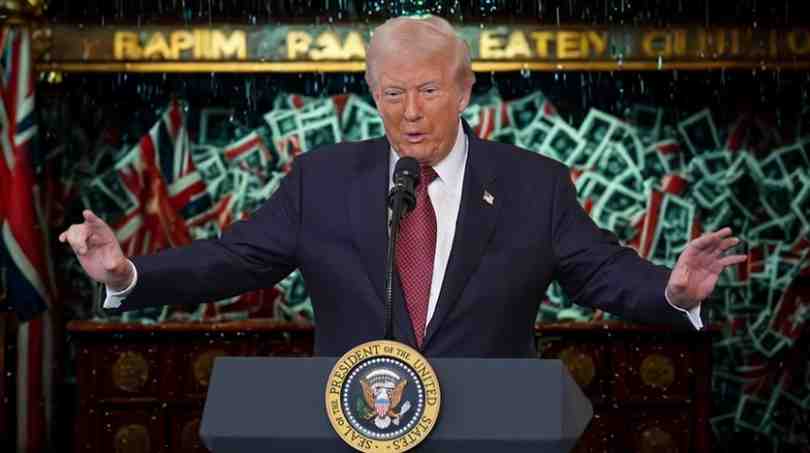
The dividend on tariffs proposed by Donald Trump is 2,000 dollars to benefit and share the trade revenue with the Americans however, scholars argue that such a program does not have enough resources to fund it, and its practicality in real life is doubtful.
Former U.S. President Donald Trump has proposed a large plan of dividing tariff money to the U.S. citizens in the form of direct payments, in which he singles out utilising money collected by using tariffs.
The concept, which is being introduced as a means of back paying the trade earnings to the people, has evoked both excitement and cynicism within economic circles. Secretary of Treasury, Scott Bessent, recently discussed how this plan may possibly succeed even though a great number of details are unknown.
What Is the Trump $2000 Tariff Dividend?
A tariff dividend is not a new idea, and the proposal made by Trump puts a politically new spin on it. In his statement, the U.S. government was going to give a payment of 2,000 dollars to the majority of Americans using the money collected in the form of tariffs imposed on imported products.
Nevertheless, this would be in favour of the middle and low income earners but leave out the high income earners.
Trump also highlighted the fact that this agenda is a direct avenue for letting the citizens enjoy his trade policies, which he touts to have fortified the American financial position.
He maintained that when there is payment of tariffs to export goods to the U.S. by other countries, this money must be given back to the American families instead of remaining in federal reserves.
Although the message has drawn so many of the voters in the working classes, economists have warned that the logistics involved are much more complex than they seem.
How Would It Work?
The so-called dividend can not necessarily be given by way of a direct dividend of cash, the Treasury Secretary, Scott Bessent, has explained. Rather, it can be organised by tax cuts or credits so that citizens will be able to experience a trickle down effect. This might involve the lightening of tax on wages, tips, overtime or even on Social Security earned scales.
Bessent put on to add the structure of the plan is very dependent on the extent of revenue tariffs it is capable of producing.
According to the current government data, the tariff revenues have been growing tremendously during the last year however, it is not clear whether the total revenue might be sufficient to secure a national payout, such as the one Trump is suggesting.
Americans who were to get as much as 2,000 as adults would cost the nation close to hundreds of billions of dollars. Such a sum can hardly be met out of the levy of tariffs unless additional levies are made or expenditure in other spheres is decreased.
Moreover, such a payment plan would require the cooperation of the Treasury Department and Congress to find a legal approval. No official policy framework or bill has been put forward so far.
The proposal of an additional payment of 2000 dollars is just tempting enough to millions of citizens. It can be viewed by many as an economic reward for being the bearer of the burden of inflation and the exorbitant cost of living.
The advocates believe that it may boost consumer spending, increase savings, and give some relief to the families that are still reeling with the economic uncertainties.
Nevertheless, financial experts caution that this plan would also be a source of inflationary pressure provided that it is not controlled accordingly. Diking billions of dollars in the economy could spearhead prices, negating the actual intentions of the benefit.
Other people consider the suggestion a figurative symbol, a campaign related move that was aimed at underscoring the economic narrative of Trump instead of a policy that actually could be implemented.
Now that discussions are going on, focus will be on the ways that the plan fits into the federal budget, trade relations and future tax policies. Trump can claim a tariff dividend of up to 2,000 dollars.
So far, this is a daring and questionable position, though it raises the questions of fiscal responsibility, trade balance, and economic equity that are of great importance.
Essentially, the concept is straightforward, have foreign tariffs to the benefit of the American people. Still, it is an uphill task, which will require not only the economic policy but also the political goodwill to transform that promise into a useful, sustainable programme.