

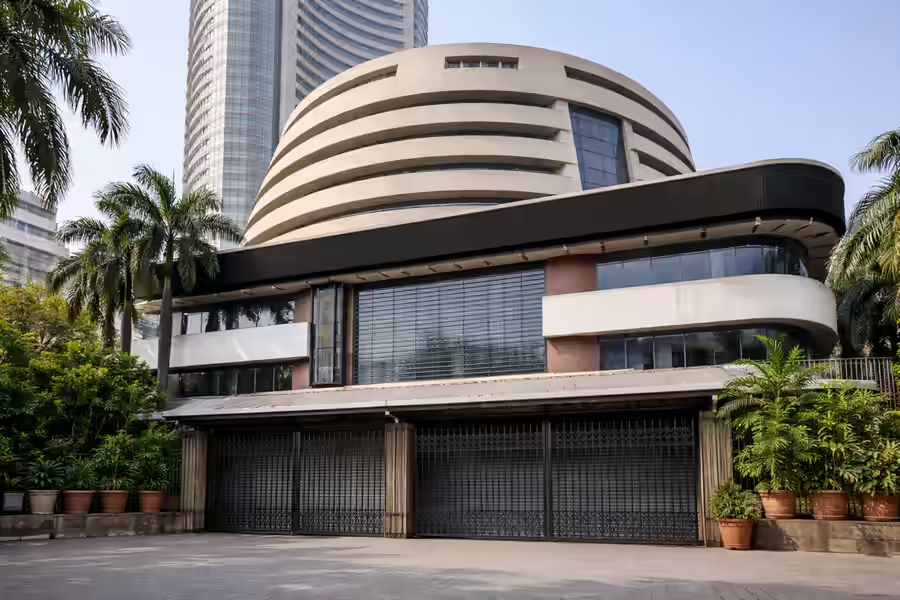
On Monday, January 26, 2026, Indian stock markets will be closed due to the Republic Day. The two big exchanges Bombay Stock exchange and the National Stock Exchange will put the day off. It will resume normal trading on Tuesday, January 27.
The holiday is not limited to equity but the currency trading as well. Nevertheless, there will be less activity in commodities as the commodity derivatives market will run in the evening session based on the exchange schedule.
In the big picture, the overall 16 stock markets in India will have 16 trading holidays in 2026 according to the official holidays calendar. The next market holiday will be on March 3 following the Republic Day of Holi. Trade was also halted earlier this month on January 15 because of elections in municipal corporations in Mumbai.
The month of March will be the one that will only have three market holidays, which means that it will be a light period to trade. There will be two holidays in April and May. There will be one holiday in June and September.
There will be two holidays in October and November, as well as one trading holiday in December. Besides all these, there are four holidays in the year that occur on weekends and this implies that the markets would have been shut on those particular days.
In the meantime, the markets concluded tormentously downwards in the past trading day on Friday, January 23. Indian benchmark indexes further lost with investors recording profits and becoming wary due to various uncertainties.
Continuing geopolitical fears, half-year corporate earnings in December, and pre-Union Budget 2026 precautionary warnings all put a dent in the mood. The BSE Sensex declined by 770 points, or 0.94 per cent, to end at 81,537.70. The NSE Nifty 50 fell by 241 points, or 0.95 per cent, to close at 25,048.65.
The crash was worse in the wider market indicating that investors were moving out of the riskier stocks. The BSE Midcap index and the Smallcap index dropped 1.6 and 2.2 percent respectively, in the session.
The resultant decrease also affected the general investor wealth. In one day, more than 6 lakh crore has been wiped out. The overall market capitalisation of the companies in BSE is less than 452 lakh crore, compared with an approximate 458.5 lakh crore in the last session.
According to market experts, there were a number of factors, which led to the weakness. Geojit Investments Limited research head Vinod Nair reported that Indian markets entered a sell off mode even though the international factors were conducive and the local economic figures like the PMI data was positive.
He claimed a sensitive feeling by increasing cost of crude oil, a drastic drop in the rupee to all time lows, ongoing selling by foreign institutional investors and corporate income that narrowly lagged expectations at a time when Indian stock prices are largely overvalued.
Nair further included that real estate and government sector bank shares were some of the worst since they were being booked with profit and the project execution was being slowed down. The stock of the companies in Adani group also continued to underperform after reports emerged of potential legal proceedings involving an American regulator.
Also Read: Anxiety Explained by Doctor as Misfiring Brain and Overactive Nervous System
In the future, the markets are likely to be cautious according to the analysts. The forthcoming Union Budget 2026, and the next interest rate rate step by US Federal Reserve are issues under close monitoring by investors, both of which are likely to shape the trend of global and domestic market in the near future.