

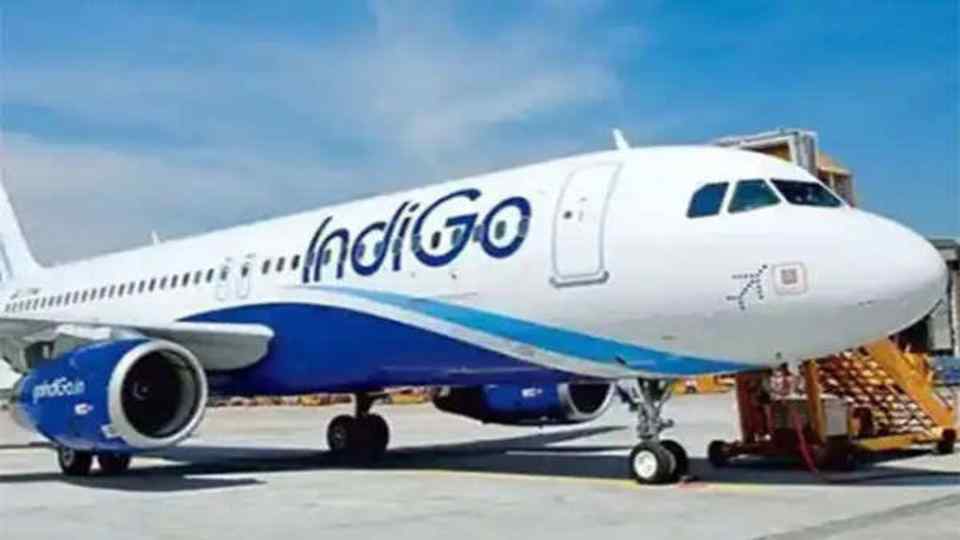
InterGlobe Aviation, which is the parent company of IndiGo, had currently witnessed a sharp fall in its stock price, dropping nearly 7% in Monday’s early trading session.
The fall comes amid ongoing operational disruptions, including successive days of major flight delays and also after cancellations across key airports.
Delhi Airport had also issued a public advisory stating that IndiGo flights may continue to experience delays, thus further intensifying concerns among travellers and investors.
The airline’s stock has now entered its seventh consecutive day of decline, which has been driven by the cancellation of thousands of flights last week that left passengers stranded and it had even forced the government to step in to regulate airfares.
Amid all the IndiGo’s troubled operations, SpiceJet’s share price surged up to 12%, making strong gains for the second day in a row.
Analysts thus believe the whole scenario was influenced by passengers shifting their bookings from IndiGo to SpiceJet due to higher reliability during the period of disruptions.
The contrasting movement in airline stocks underscores the market’s reaction to service stability and customer trust.
The downturn in the IndiGo’s stock had also intensified after the Directorate General of Civil Aviation (DGCA) issued a show cause notice to the airline.
The regulator’s notice highlighted the issue of “serious shortcomings in planning, supervision, and resource management,” which had been pointing specifically to failure in properly arranging staffing, the duty hours, and also on the aspect of scheduling under the revised Flight Duty Time Limitations (FDTL) regulations.
According to DGCA, IndiGo was also informed about the updated rules in advance but did not prepare adequately, which had thus been leading to operational chaos.
The regulator’s actions could also lead to increased compliance expenses and possible temporary restrictions, contributing to further investor unease.
Delhi Airport had also recently issued a statement advising passengers to check their flight status before leaving for the airport, thus citing potential ongoing delays. The airport authority had also assured that teams were working with the airline to minimize disruptions and assist affected passengers.
Financially, IndiGo’s whole situation pressure extends beyond all the kinds of operational setbacks.
In its Q2 FY2025 results, the airline had recently reported a significant net loss of ₹2,582 crore, widening sharply from ₹987 crore in the same quarter last year.
This loss came despite a 9.3% increase in operational revenue to ₹18,555 crore. Rising foreign exchange expenses contributed heavily to the weakened financial performance.
Although passenger numbers rose 3.6% and capacity increased by 7.8%, the airline’s EBITDAR margin fell dramatically to 6% from 14.3%, indicating weakened operational profitability.
With regulatory scrutiny, financial challenges, and service disruptions mounting simultaneously, IndiGo faces a critical period that will test its resilience, operational planning, and market leadership in India’s aviation sector.
Disclaimer: This article is for educational and informational purposes only and should not be considered financial advice. Market movements can be unpredictable, and investment decisions involve risk. Please consult a certified financial advisor before making any investment or trading decisions.
Image Source: X/@Investalign