
Luxury firms in industries like fashion and real estate have begun utilizing blockchain to facilitate and secure payments as blockchain technologies, such as cryptocurrencies, gain popularity. A new demographic of purchasers who are well-versed in cryptocurrency is the target of these novel concepts. Users can readily engage in luxury trade by converting Bitcoin to US dollars on websites such as Kraken.
Crypto is rapidly increasing alternatives in the realm of luxury commerce by providing customers with more flexibility through digital certificates of ownership and access to high end purchases through stablecoins and Bitcoin.
Authenticity more especially, counterfeiting is one of the most significant problems facing the global luxury market. Because counterfeiting costs the sector a lot of money every year, blockchain’s benefits are essential.
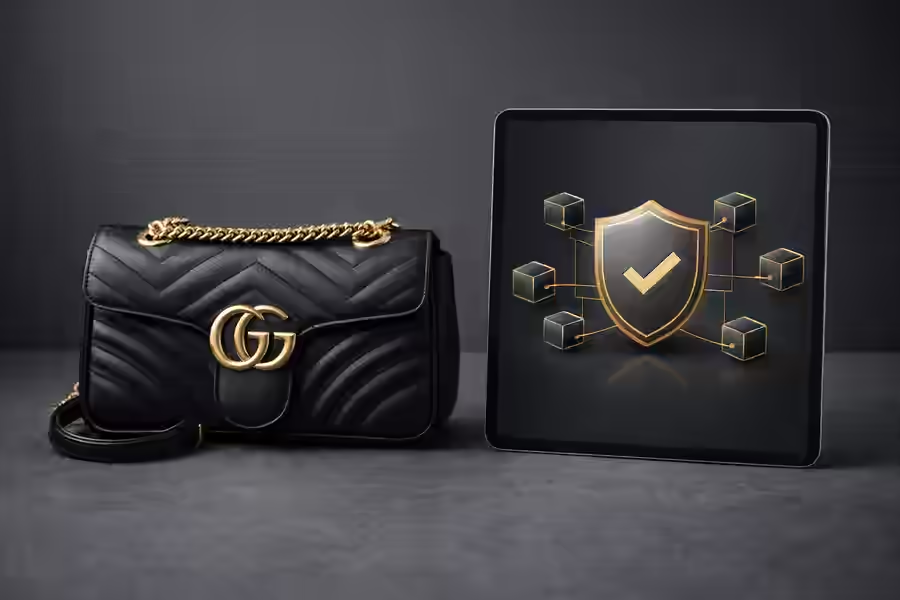
Businesses can use blockchain technology, for example, to create trustworthy information sources by issuing NFT backed certificates of authenticity that sellers can add to but not remove. Immutable ownership history monitoring is eventually informed by these certifications, which make it clear where a particular object originates and whose hands it has passed through throughout time.
Since every transaction or ownership transfer is documented on the blockchain, businesses can further improve history tracking by implementing smart contracts, which can be configured to confirm the origin of products. In sectors like fashion, where a large number of products wind up in secondhand markets or are repaired at third-party stores, this type of accountability is very helpful.
As cryptocurrency has gained popularity among institutional investors and big financial organizations, high net worth people have grown increasingly at ease with its use in recent years. As a result, a lot of high end clients are asking for digital payment methods for items like watches, real estate, private jets, and artwork.
In response to this increasing demand, several businesses have partnered with cryptocurrency payment processors such as Kraken, which has allowed them to accept USDC, ETH, and BTC. Platforms with real time capabilities can then be used by buyers to assure fair pricing and swiftly assess conversion value.
The emergence of digital assets, particularly tokenized real world assets (RWAs), is arguably one of the more prominent blockchain-based innovations in the luxury market. In addition to appealing to Gen-Z and millennial consumers who might not otherwise purchase RWAs, these innovative asset ownership strategies also provide luxury buyers with additional avenues for portfolio diversification by including cryptocurrency.
Since tokenization alters the way users can interact with prospective assets, it is growing in popularity in sectors like real estate. According to IBM, a developer can eliminate the need for conventional bank financing and the conventional sales timeline constraints on investment property by tokenizing a property on a blockchain. Finding a buyer or seller for a portion of the property is all that is required to increase or decrease a position on the buyer’s side.
By opening up assets to a worldwide clientele, this general decrease in currency exchange friction modernizes and democratizes once inflexible financial systems. However, it should be highlighted that tokenization is still in its infancy and is the target of ongoing regulatory discussion aimed at enhancing its security and compliance with the law.
Luxury firms have started utilizing cryptocurrency to give consumers new experiences because of the blockchain’s growing versatility and range of applications brought about by technological breakthroughs.
For instance, some companies have begun to offer NFT memberships, which grant members access to exclusive events or drops. In order to keep members, they also offer them tokens and other incentives that can increase in value over time. Similar to this, other businesses provide tokenized loyalty programs that convert actual assets into tokens to make management, trading, and storage easier.
Also Read: What Nitish Rajput Alleged in SSC Exam Videos and Why Eduquity Filed ₹2.5 Crore Case
Furthermore, some companies even sell virtual goods in metaverse platforms that are connected to real world objects, allowing users to communicate with other users or products virtually. In addition to increasing engagement, these technologies open up new sources of income outside of traditional retail.