

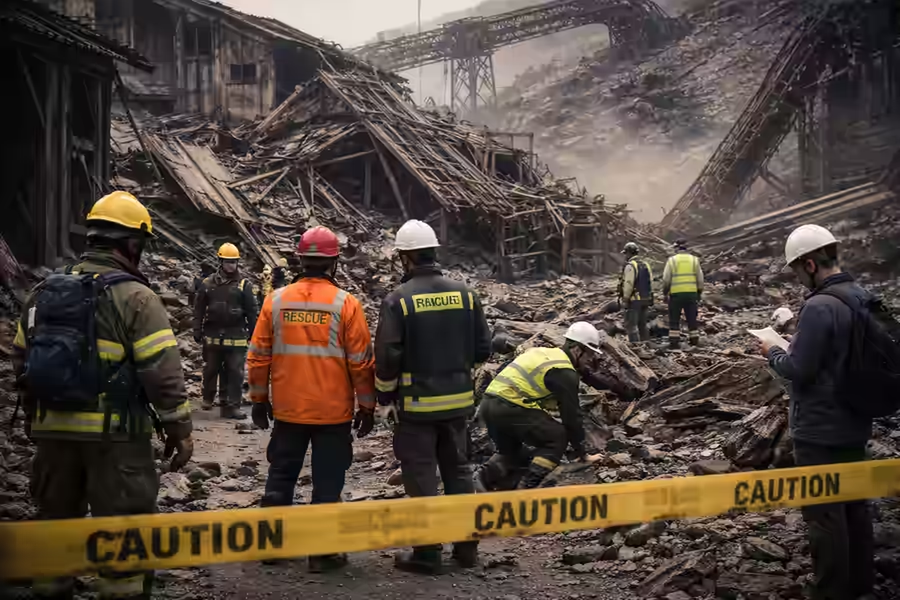
Meghalaya Chief Minister Conrad K. Sangma on Monday, February 9, 2026, declared the formation of a judicial investigation committee into the tragic explosion at an underground coal mine in the East Jaintia Hills district that took the lives of 27 people.
The ruling is reached at a time when there has been increased outrage as to why illegal mining activities continue in the State even more than ten years after the activity was officially banned.
Last week the explosion took place in a remote village called Thangsku, Mynsngat, which has long been a location of rat-hole mining.
This disaster led to a multi-agency search and rescue operation. State Disaster Response Force teams, local police, district officials and community volunteers had to work several days in dangerous conditions before the bodies of the whole population of the victims were retrieved.
The magnitude of the operation highlighted the distance of the location in addition to the hazardous facts of informal mining.
The Chief Minister stated in a press release that the government would establish a Judicial Inquiry Commission under the Commissions of Inquiry Act to probe into the incident. The panel is supposed to look into the series of events that caused the blast, identify responsibility and suggest measures to help in protecting against such disasters.
Authorities in the Home Department offered that the investigation would examine not only direct operation malfunctions, but also that of the larger network which allows the illegal mining of coal to persist.
The announcement has glimpsed back on the rat-hole mining where small tunnels are excavated horizontally along the hillsides to access coal. A ban on the practice was imposed by the National Green Tribunal in 2014 due to the stated harmful environmental degradation, unsafe working conditions, and endangered human lives.
However, in spite of the ban, illegal mining has been a repetitive problem in some districts, which in most cases has been supported by the complicated system of supply networks and economic reliance within the locality.
Opponents point out that regular raids have not been able to destroy the financial systems behind the trade. The law enforcement agencies have since been requested to put more efforts towards arresting and dealing with those who finance and benefit off such activities.
Observers point out that, in the absence of attacks on the financiers and transport networks, it is unlikely that mine level enforcement will succeed.
To most coal belt families, the recent tragedy is a bitter memory of what workers have to face when they have no alternative sources of livelihood.
With the judicial commission starting its operation, there is a high level of anticipation that it can go beyond the normal process of fact-finding and suggest lasting reforms, weighing the environmental concerns, safety of workers, and economic situations.
Also Read: Chocolate Day 2026: When is it, Its history and why people Celebrate
The result of the investigation perhaps could determine the future of mining regulation in Meghalaya where the conflict between regulation and survival has been open to years.