
New diplomatic talks between Washington and New Delhi have caused a new wave of serious claims by the United States that India is changing her imports of energy at least; the Indian government has not publicly established that she is changing imports.
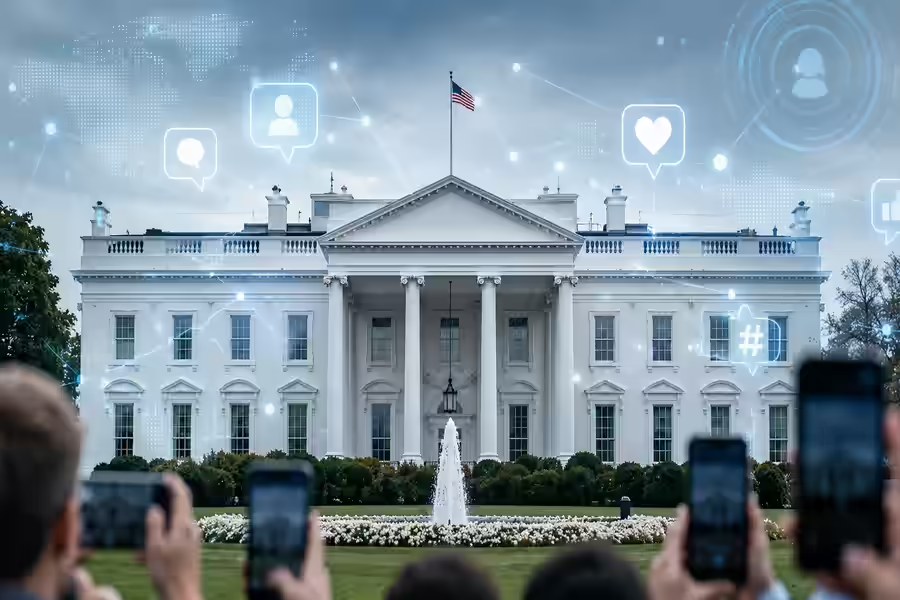
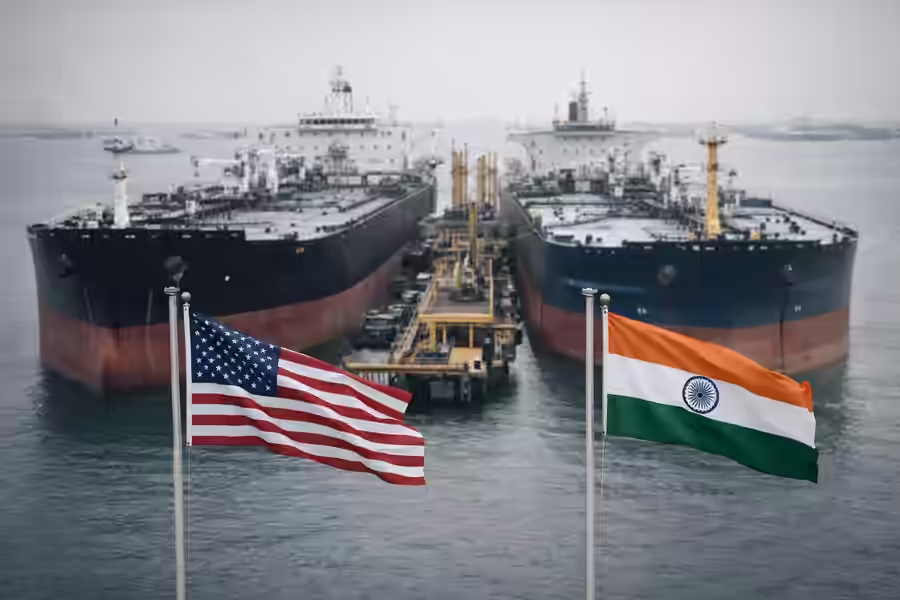
A day later, White House Press Secretary Karoline Leavitt announced that India agreed to not buy any oil in Russia anymore, but instead to import more in the United States.
In an interview with the reporters outside the White House, she said that the development was a culmination of direct negotiations between US President Donald Trump and Indian Prime Minister Narendra Modi.
According to Leavitt, New Delhi had promised to stop its dependence on Russian oil and increase its energy trade with Washington. She further indicated that India might also think of purchasing oil in Venezuela because the US is now in the position of regulating vital Venezuelan oil business.
She stated that the change would not only benefit American workers and industries but also transform energy relations in the world.
Tying the assertions of energy to wider efforts to cooperate economically, Leavitt stated that India had also committed to make massive investments in the US. She quoted an estimate of about 500 billion dollars which she indicated would be channeled into areas like transportation, energy and agriculture.
In her interviews with American media outlets, she presented the arrangement as a significant economic victory of the United States and attributed the arrangement to President Trump, who personally negotiated the deal.
These statements of the White House were released soon after President Trump declared that the two nations had reached a deal to restart trade conditions after months of tension on tariffs and Indian crude oil purchases in Russia.
In his story, Trump indicated that the tariffs applied to Indian products entering the US would be brought down to 18 percent, and another 25 percent fine, which used to be coupled with the Russian oil trade, would be eliminated.
The reduction of tariffs was later confirmed by Prime Minister Modi who welcomed the move and stated that it would render Indian goods more competitive in the American market. But, in addition to the tariff modifications, New Delhi has not publicly listed other aspects of the understanding outlined by the US officials.
Instead, Indian authorities have aimed at domestic-based economic safety. Commerce and Industry Minister Piyush Goyal announced that sensitive industries like agriculture and dairy had been safeguarded via the agreement.
He stressed that the government was adamant on protecting the interest of farmers and rural communities as well as widening its trade opportunities.
Goyal also added that the government was assured that, the new terms in trade will favor the Indian industry, without negatively affecting the sectors that had been negatively affected.
He pointed to national-wide feedback that the agreement could have widespread support, but he has not talked about the particular assertions regarding the Russian oil imports.
It is interesting to note that even after Washington made several claims, India has not made any official declaration to stop its purchase of Russian crude. The trade between India and Russia in the energy sector has also increased in recent years, with Russia being one of the major suppliers of India.
Moscow has been hesitant in its response too. Dmitry Peskov, a Kremlin spokesperson, had not been able to find a single word of official communication by India that it had changed its oil purchases. He further mentioned that Russia would keep on building its strategic relationship with New Delhi.
Also Read: Chandrika Dixit Accuses Husband Yugam Gera of Cheating in New Case
The contrasting political standpoints of the people emphasize the dynamics of the changing situation. Although the United States is framing the developments as a ground breaking geopolitical and economic success, the official Indian communications are thus far focused primarily on tariff relief and domestic protection.
With the advent of additional information, the interest area will continue to be whether energy trade patterns do change and how it can influence the global markets and diplomatic relations.