
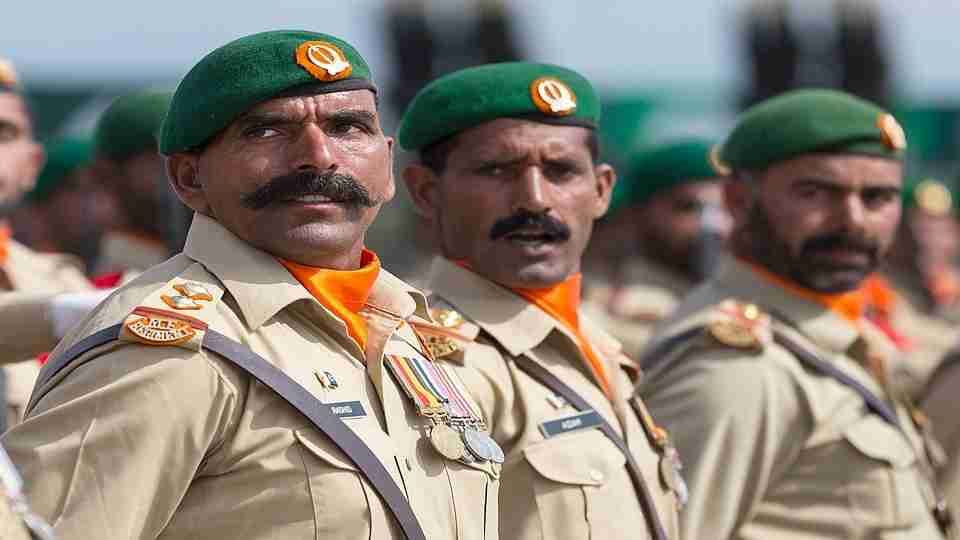
Under the guidance of General Asim Munir’s leadership, the Pakistan Army now appears to be navigating a complex and thus also a controversial path.
It has been blending all the military authority with an increasingly visible religious tone.
Munir, who has been widely known for his deep religious beliefs and also for his background in military intelligence, has npw assisted and brought a noticeable shift in the army’s ideological orientation.
Analysts now also suggest this transformation may signal a return to a more conservative and faith-driven military structuring of early Islamic traditions rather than a modern, professional army structure.
The Pakistan Army has from long played a very decisive role towards shaping the country’s political and social direction.
However, under the guidance of Asim Munir, there is growing concern that the focus is now shifting towards the reinforcing religious ideology rather than institutional modernization.
Such an approach now also risks the deepening societal divisions and steering Pakistan away from democratic and secular principles.
Critics now also fear that invoking the spirit of 7th-century Arabia in contemporary governance could further marginalize liberal voices and weaken Pakistan’s fragile democracy.
This ideological shift also has been the ones with regional and international implications.
With the Taliban’s influence rising in neighboring Afghanistan and religious conservative thinking growing domestically, Pakistan’s military leadership appears to be emphasizing faith as a unifying force.
However, this approach could also alienate the moderate sections of society, affect various foreign relations, and also can be reason to hinder the country’s progress toward modernization and global integration.
Image Source: Wikimedia