

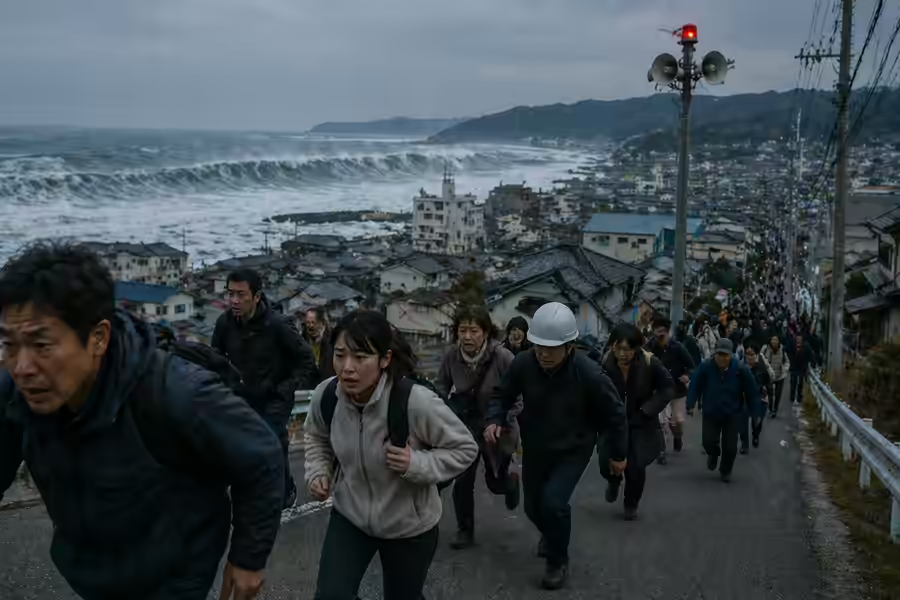
On Monday, a strong earthquake hit the north of Japan triggering tsunami alarms and emergency evacuations along the coast. The magnitude of the tremor was 7.4, which occurred in an offshore area close to Iwate prefecture, and the vibrations were felt hundreds of kilometres distant, even in Tokyo.
The situation was almost immediately switched to emergency mode and first tsunami activity has already been reported.
Tidal Warning Sounded, Wave Breaks
The quake took place in the Pacific waters around 4:53 PM local time, according to the meteorological agency of Japan. The tsunami wave was about 80 centimetres and it was witnessed within an hour in one of the ports at Kuji in Iwate.
The officials had previously warned that waves of up to three metres would hit several coastal regions. People living in affected areas were advised to evacuate the area as soon as possible to safe areas and avoid rivers and beaches.
Emergency warnings emphasized that tsunami waves may come in successive waves and it is unsafe that people can resume until its official lifting.
[Tsunami Warning]17:08 JST on 20 Apr 2026, A tsunami warning has been issued for Pacific Coast of Aomori Prefecture. Those in coastal or river areas, evacuate right now to high ground and safer areas.
— 内閣府防災 (@CAO_BOUSAI) April 20, 2026
Public broadcaster NHK television images of coastal areas were on alert but did not point to any significant observable damage in the first hours after the quake.
Activation of Emergency Response by the Government
The response by the central government of Japan was prompt and a crisis management team was formed shortly after the earthquake. Prime Minister Sanae Takaichi urged people in risky regions to consider their safety and obey evacuation orders.
Also Read: Who Is Kajal Meena? RAS Topper Arrested in ₹60,000 Bribery Case
Governments are now evaluating the situation to see how many people were injured, dead or the state of infrastructural damage. Authorities have also warned that in the next hours and days aftershocks are a possibility.
Why Earthquakes are common in Japan
The geography of Japan predisposes it to be one of the most earthquake prone regions in the world. The nation is located in the Pacific ring of fire and various tectonic plates intersect, resulting in frequent earthquakes.
Approximately there are approximately 1,500 earthquakes in Japan annually. Although they are mostly minor, more powerful quakes may lead to tsunamis and damage an area significantly based on the depth and the location.
A History Which makes Preparedness
The history of disasters in the past still affects the systems of response in Japan. The 2011 earthquake and tsunami was one of the most fatal events in this country that took thousands of lives and a Fukushima nuclear crisis.
Also Read: Deepika Padukone and Ranveer Singh Announce Second Pregnancy with Dua’s Photo
In more recent times, the authorities have been keeping a close watch on the Nankai Trough region which is one of the largest seismic zones that have the potential to produce large scale earthquake, the so-called megaquake. According to the government estimates, an occurrence like that will be disastrous should it happen.
Situation Still Developing
In the meantime, safety and observing additional seismic activity are in the immediate focus. Although there have been no significant damages that have been verified so far, authorities are ensuring that the level of alertness is high because of the threat of other tremors and recurring tsunami waves.
In Japan, people living along the coast have been advised to remain in safe areas until the authorities confirm that the threat is completely over.
Also Read: