
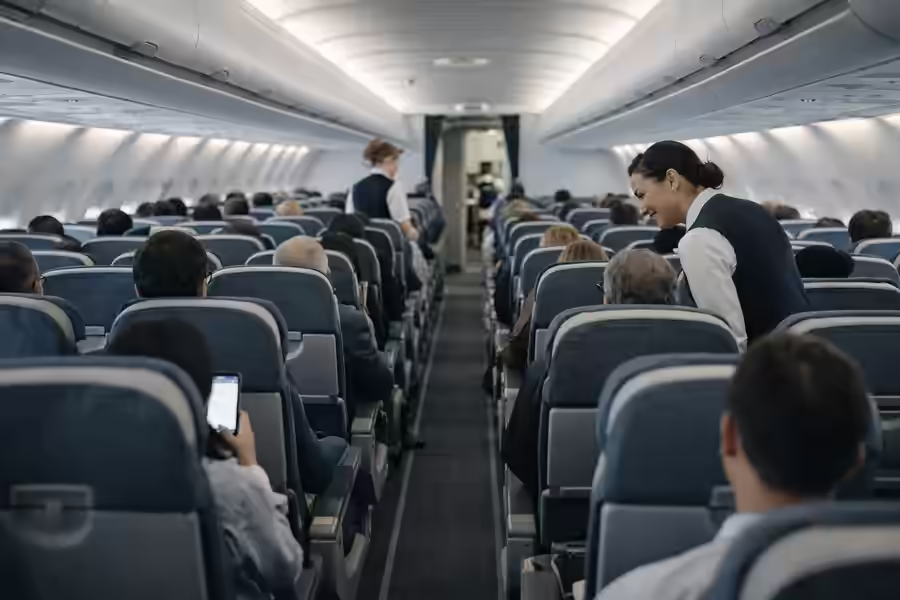
It has now directed domestic airlines that they cannot charge more than 60% of the seats in domestic flights. The action is designed to protect passengers by making sure they are charged reasonable prices, particularly when demand for tickets were through the roof.
The decision comes as consumers and lawmakers grow increasingly concerned about soaring ticket prices on domestic routes, particularly during peak travel periods, holidays and emergencies. Officials hope the new directive will lead to more transparency and lower prices in India’s aviation industry.
Ensuring fair pricing for passengers
The directive is aimed at protecting passengers from excess charging, government sources said. Travellers have attributed some of the inducer to dynamic pricing models, with instances reported in recent months where flight tickets became significantly expensive within a few hours.
As per the new order, airlines would need to maintain a minimum capacity in terms of numbers no less than 60% of the seats available within an officially prescribed pricing spectrum, without levying any extra or surge hit.
This is likely to offer some price certainty for passengers booking domestic flights in advance and last minute.
Impact on airline pricing strategies
In India, airlines usually follow dynamic pricing models based on demand, availability and booking timelines. Although this system enables the airlines to maximize revenue, it sometimes leads to steep ticket price increases.
Under the transformational leadership of Hon’ble Prime Minister Shri Narendra Modi Ji, India has established itself as the world’s third-largest domestic aviation market.
— Ram Mohan Naidu Kinjarapu (@RamMNK) March 18, 2026
Supported by the UDAN scheme, air travel in India has evolved from being an elite privilege to an inclusive… pic.twitter.com/gbr2YmROIb
The government’s directive will mean airlines need to rethink the way they price a lot of seats on every flight.
That means airlines will likely still be able to use dynamic pricing for up to 40% of seats, enabling them some wiggle room and still be “in accordance with guidelines”, industry experts say.
This method attempts to balance consumer protection with profit for the airlines.
Whether it addresses fears over soap-on-the-road trips
The air travel industry has previously received backlash for raising fares, sometimes steeply, during emergencies or peak demand periods. Ticket prices usually go up substantially during travel days, festivals, long weekends, and crises.
Limiting extra fees on most seats means that other authorities are attempting to ease pressure on travelers and maintain access for essential travel.
The officials have said the directive is part of a wide-ranging effort to enhance accountability and fairness in the aviation industry.
Monitoring and enforcement
Airline compliance with the directive is to be enforced by government agencies. Airlines could be obliged to disclose pricing data, or comply with certain rules by aviation regulators.
Although specific enforcement methods have not been fully detailed, officials believe that those who do not comply with the guidelines could be subjected to increased scrutiny from regulators.
Officials are likely to be monitoring fare trends closely so that airlines can’t evade the rules through indirect pricing mechanisms
Industry response and implications
The directive is expected to create a deep impact in the aviation sector more so with airlines that use dynamic pricing systems where they can increase the prices of tickets just per click.
Some analysts say the switch could hit profit margins, particularly on routes where demand varies significantly. Other observers maintain that stable pricing could restore passenger confidence, and consequently fuel overall demand for air travel.
The directive grants relief for passengers by making ticket prices less unpredictable and expensive.
Broader impact on domestic travel
Low-cost air travel has a function that’s key to India’s transport ecosystem, linking big cities to smaller towns. Stable pricing has the potential to stimulate demand for broader travel that underpins tourism, business activities and connectivity into those regions.
Expectations regarding the government’s move to further promote consumer confidence in the aviation sector and enable airlines to operate within a fair pricing structure could also be positive.
With domestic air travel increasing, initiatives like this may influence how airlines deploy pricing strategies to ensure customer loyalty.
Also Read: LPG Shortage Alert – Useful Kitchen Hacks For Indian Households
In the meantime, passengers should find there’s more price stability on most seats, although airlines implement the new guidelines from the government.